

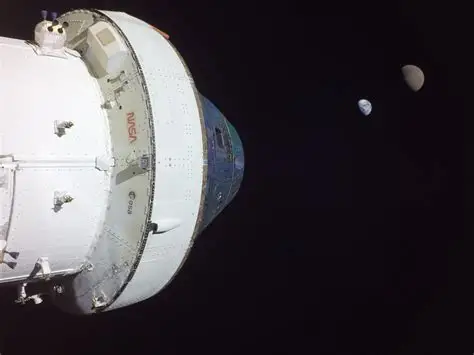
In a previous blog, I mentioned that the Artemis programme would be subject to delays and maybe cancellations.
The first has come true already.
But I didn’t expect an additional mission to be inserted in the schedule.
So it’s time for an Artemis update.
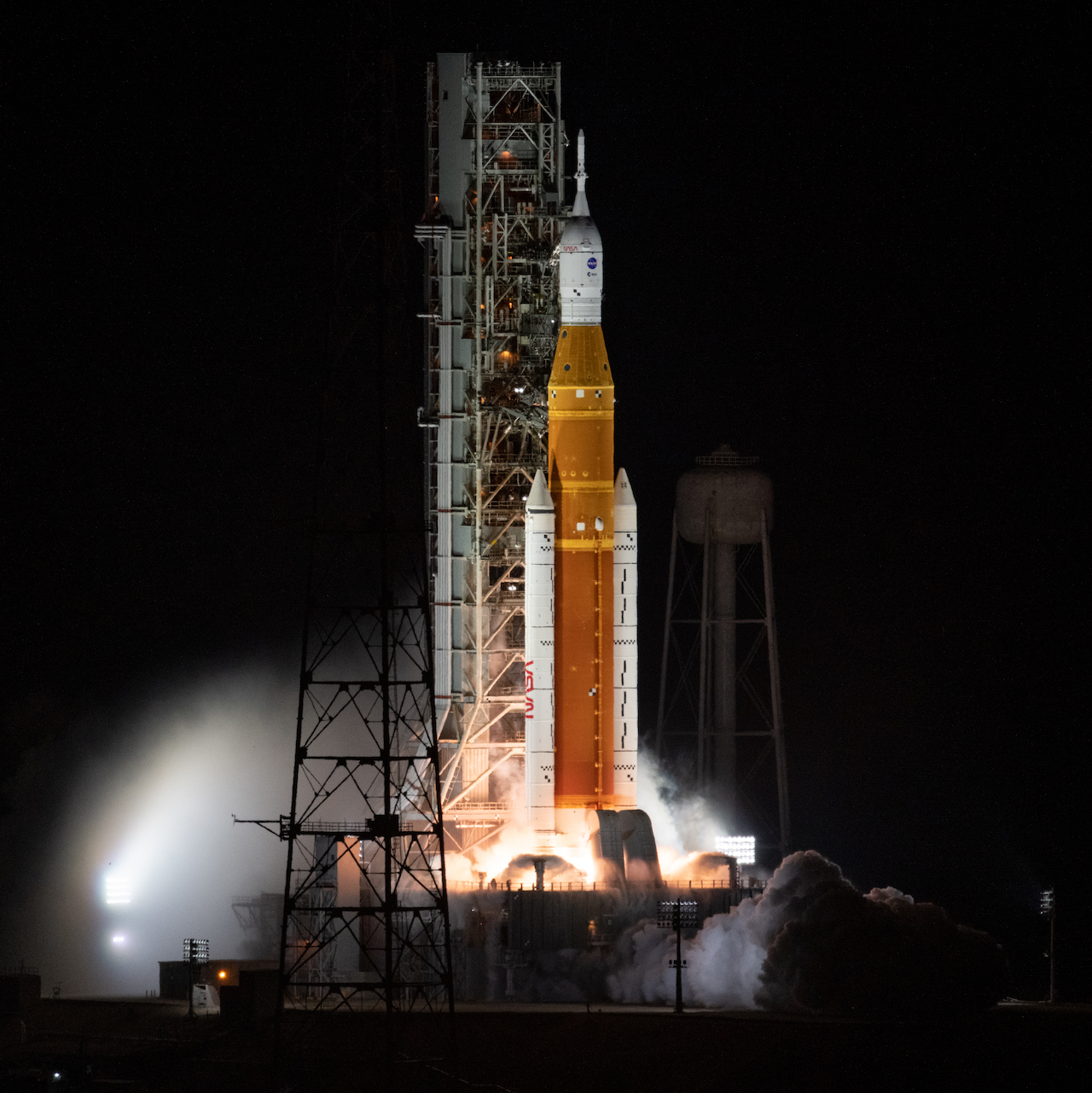
Artemis 1 launch: NASA
The Problem
The Artemis rocket, the Space Launch System (SLS) is a complex machine.
The launch delay is due to a technical issue. It arose when SLS was rolled out to he launch pad.
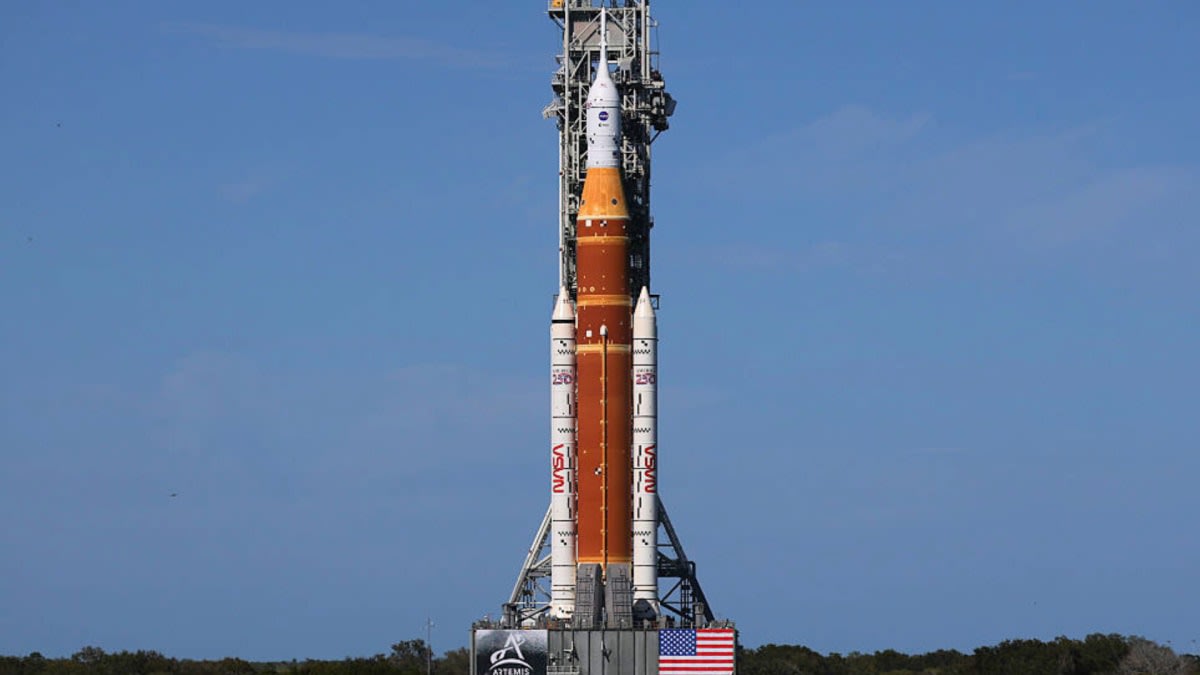
Artemis 2 on launch pad 39B: NASA
NASA engineers found a problem with the flow of helium in the upper stage.
Helium is used to pressurise the liquid hydrogen and liquid oxygen tanks.
To sort out this problem, SLS was taken back to the Vehicle Assemble Building.
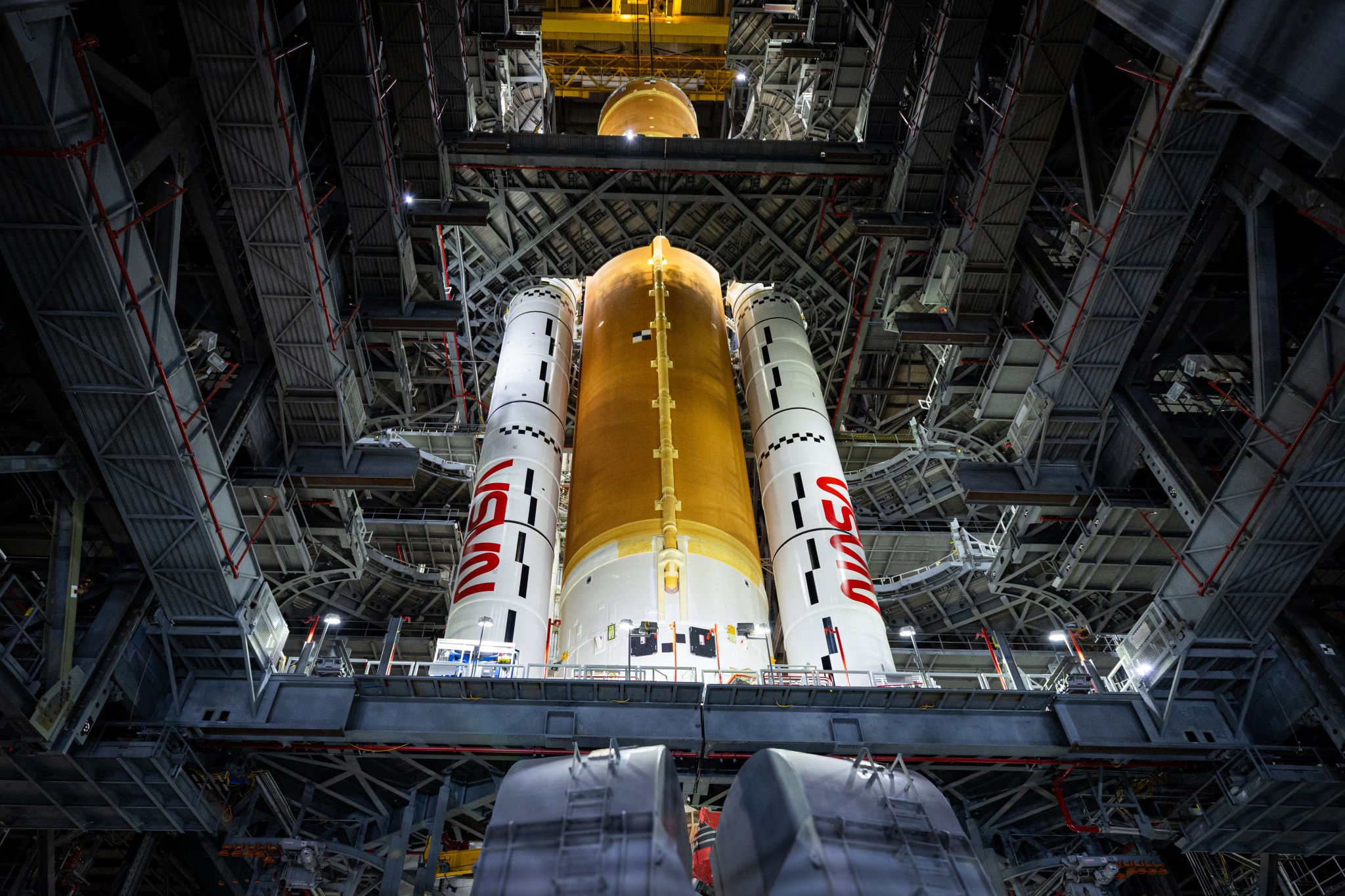
Artemis 2 in Vehicle assembly Building: NASA
The Delay
Roll back means that a March launch is not possible.
So Artemis 2 should now launch in April.
Possible dates are April 1st, April 3rd to 6th or April 30th.
Latest News
At a meeting on March 12th, NASA announced new dates.
Rollout to the launch pad will be on March 19th.
The launch could take place on April 1st.
Is April Fools’ day a good choice? I’ll leave that up to you.
The Astronauts
The delay means that the four astronauts are released from pre-launch quarantine.
Christina Koch, Victor Glover, Reid Wiseman and Jeremy Hansen will return a couple of weeks before the new launch date.
We can only imagine the frustration and stress that they feel right now.
I guess it’s all part of an astronaut’s life but still not easy to deal with.
Mission Summary
Artemis 2 will take the four astronauts around the Moon and back to Earth.
They will not land on the moon.
The 10-day mission is designed to test the rocket and spacecraft Orion.
The astronauts will fly further into space than any human before.

They will return to Earth at a record speed of 25,000 mph.
Splashdown will be in the Pacific Ocean.
It is a similar mission to Apollo 8 in December 1968.
Mission Changes
Artemis 3
NASA also announced a significant change in the Artemis programme.
Artemis 3 was scheduled to land astronauts on the moon in 2028.
That has changed.
Now Artemis 3 will be another crewed test mission, similar to Apollo 9 in 1969.
It will launch in 2027 and take the Orion module into low Earth orbit.
There the astronauts will rehearse docking with the lunar lander.
This will either be a Space X Starship or Blue Origin’s Blue Moon.
It will also test the new Artemis astronaut’s spacesuit.
Artemis 4
This will now be the big one: the first people on the Moon since 1972.
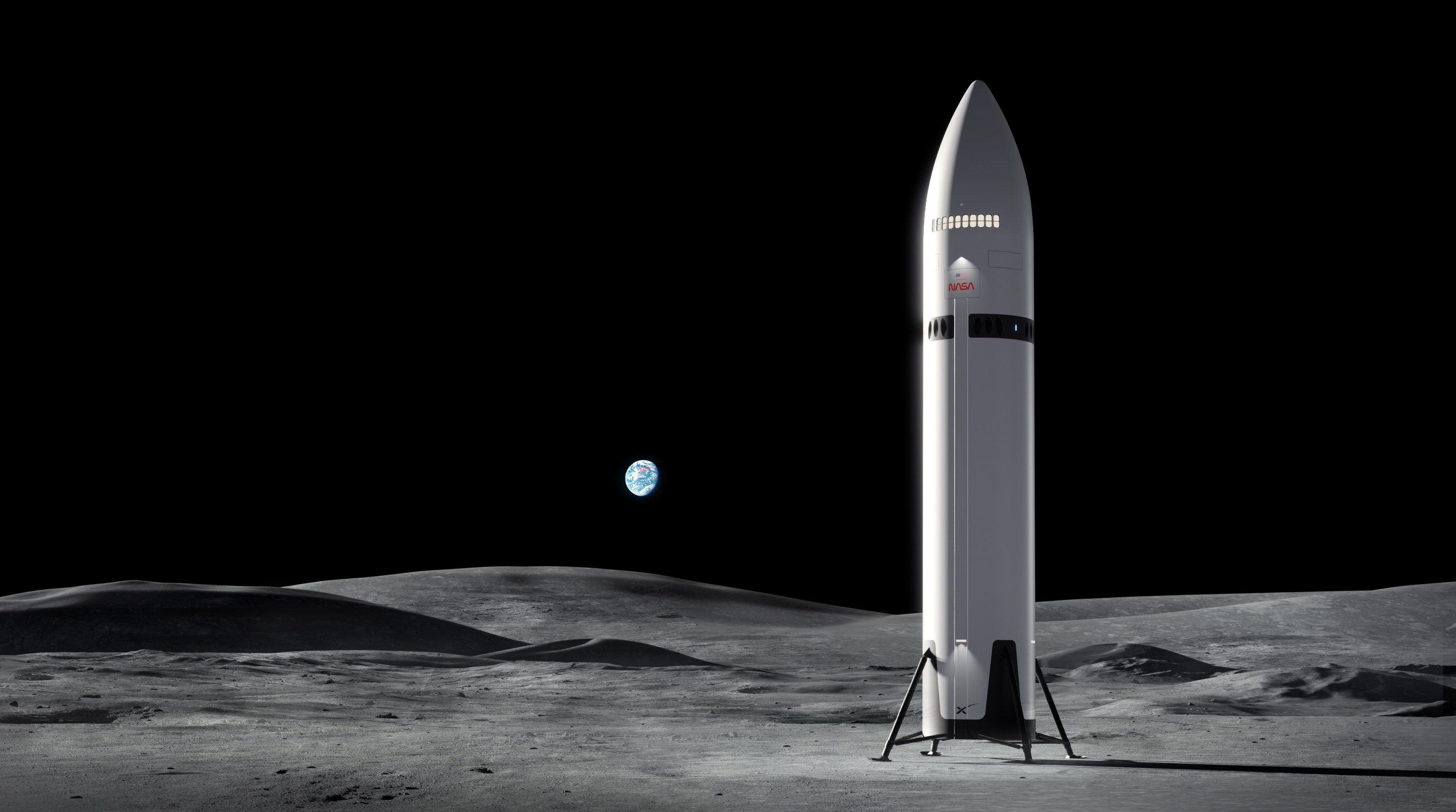
Future Artemis 4 Moon landing: NASA
If all goes well, it will launch in early 2028.
The unmanned lunar lander – a Starship or Blue Moon – will be sent into orbit around the Moon.
Then the SLS will launch the crewed Orion spacecraft to dock with the lander.
The lander will descend to touch down close to the Moon’s south pole.
The astronauts will carry out at least two Moon walks before returning to Earth in Orion.
Artemis 5
Following closely, later in 2028, Artemis 5 will be the second crewed landing.
It will see astronauts begin to construct a Moon base.
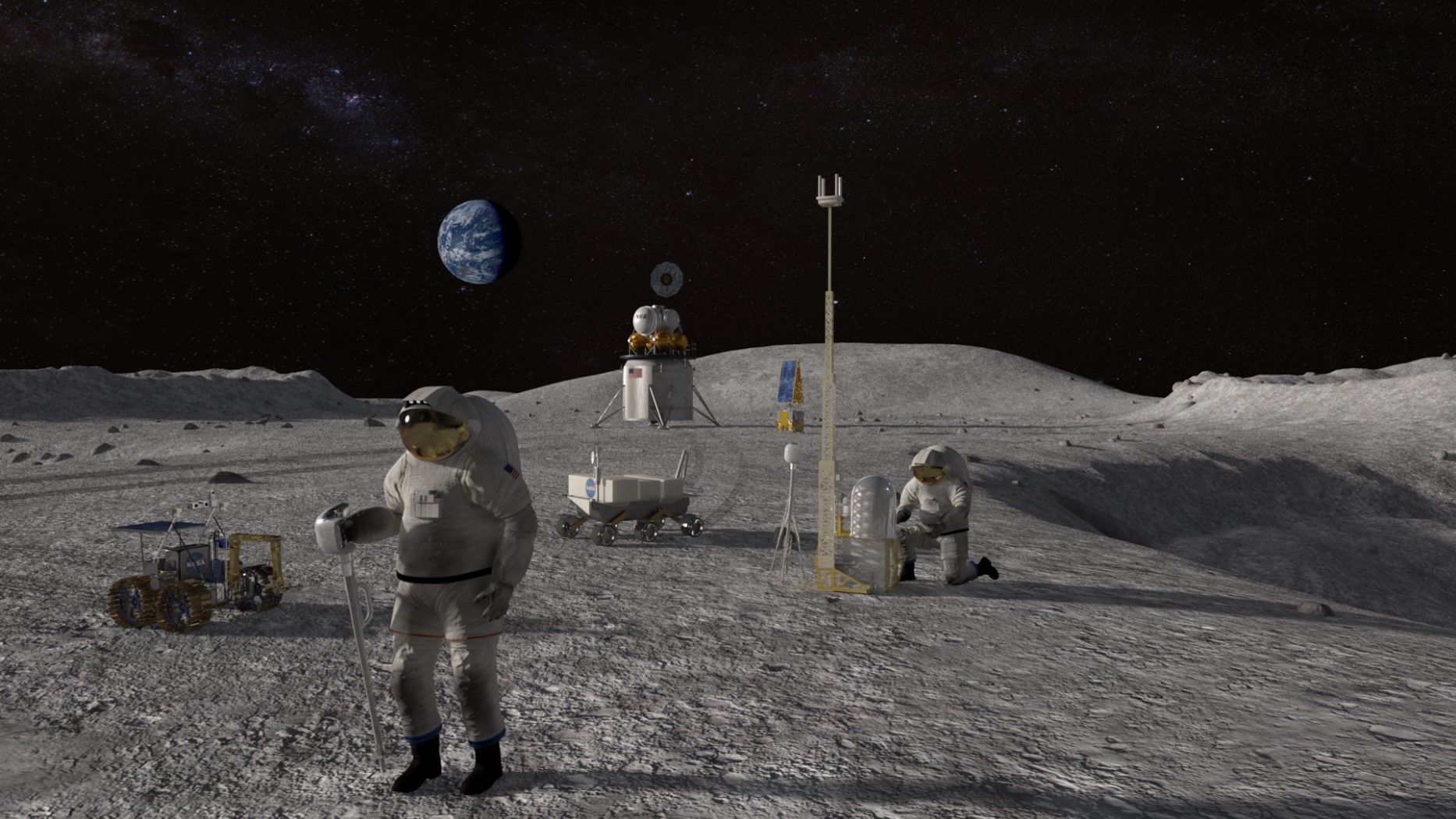
Artemis 5: NASA
The Orion Spacecraft
Let’s have a quick look at Artemis from an astronaut viewpoint.
Orion is comparable with the old Apollo command and service modules.
But Orion is bigger and has 21st Century technology.
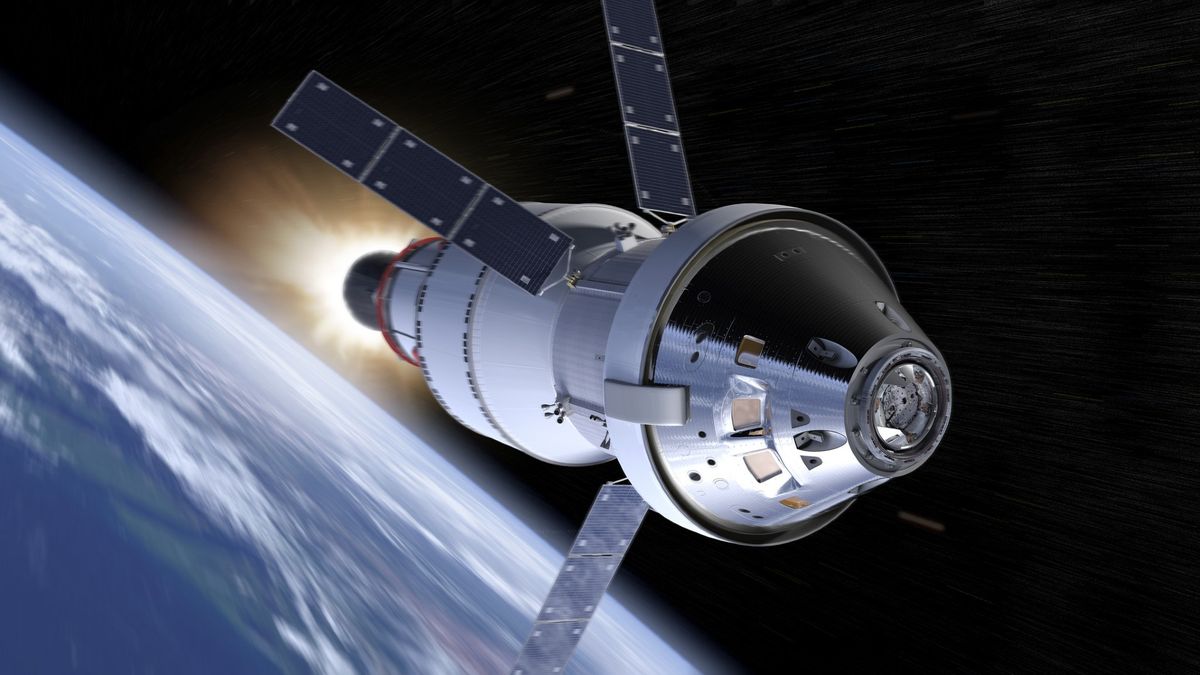
Crew Module
The crew module is 5 metres wide and 3.3 metres long and weighs around 8.5 tons.
The Artemis 2 astronauts will spend 10 days in this tiny craft.
Good news for them is that, unlike their Apollo counterparts, it has a toilet!
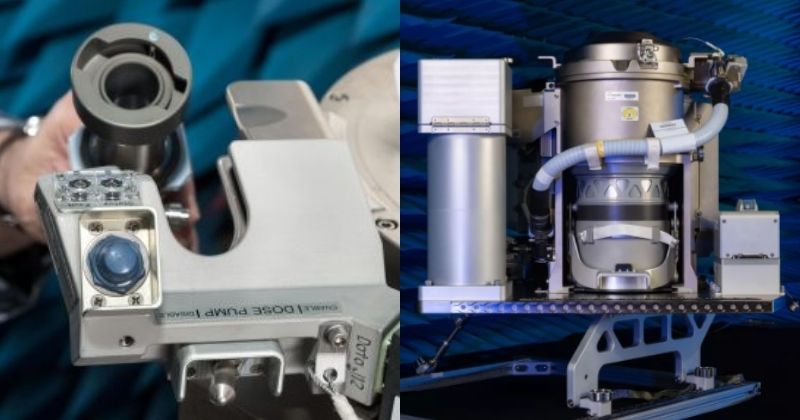
Orion toilet and waste management system
It has bunks for sleeping and storage for consumables like food and water.
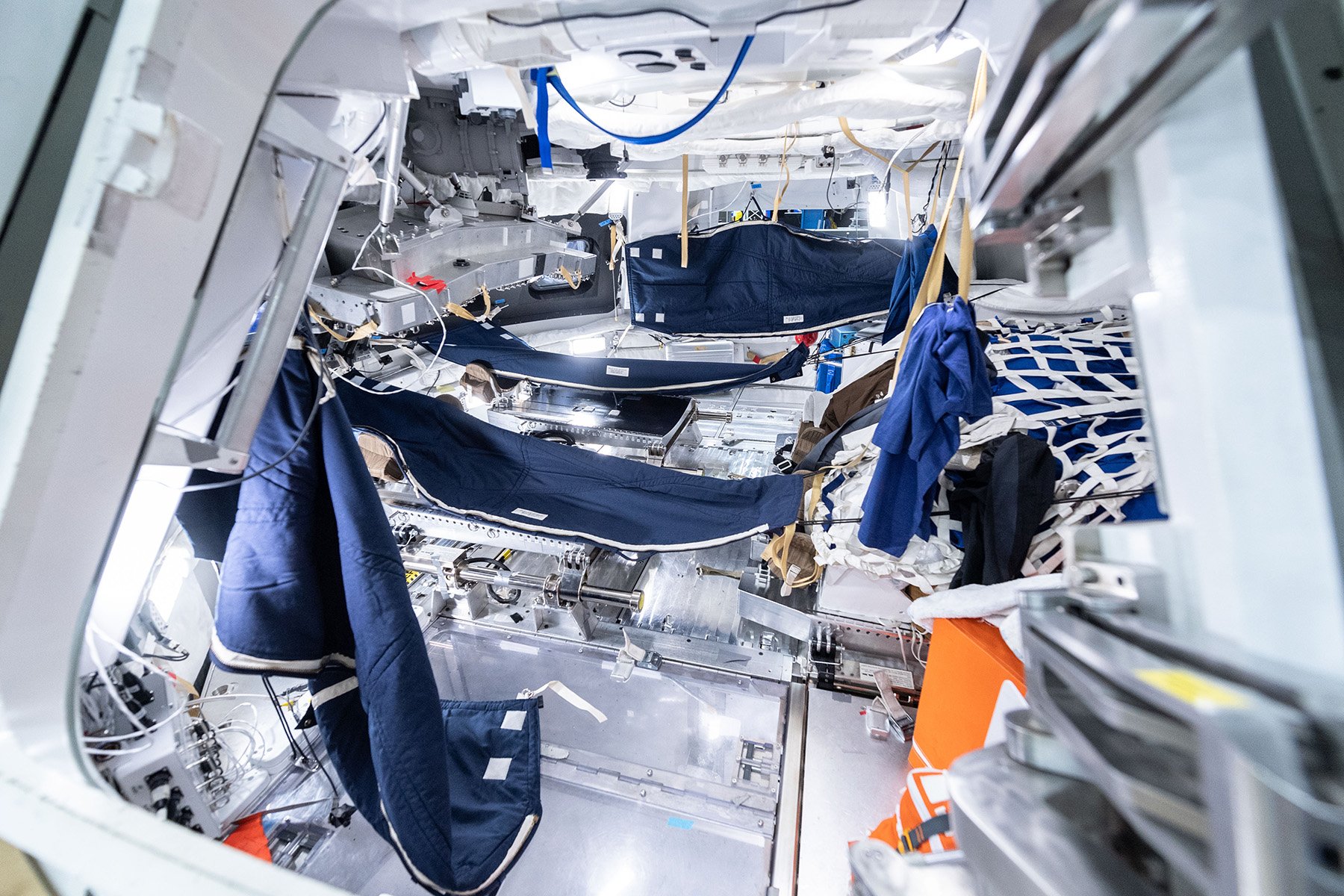
Orion interior: NASA
The air inside is like Earth’s, a mixture of oxygen and nitrogen.
The crew module is the only bit of hardware that returns to Earth.
It’s designed to land on water, in the ocean.
Service Module
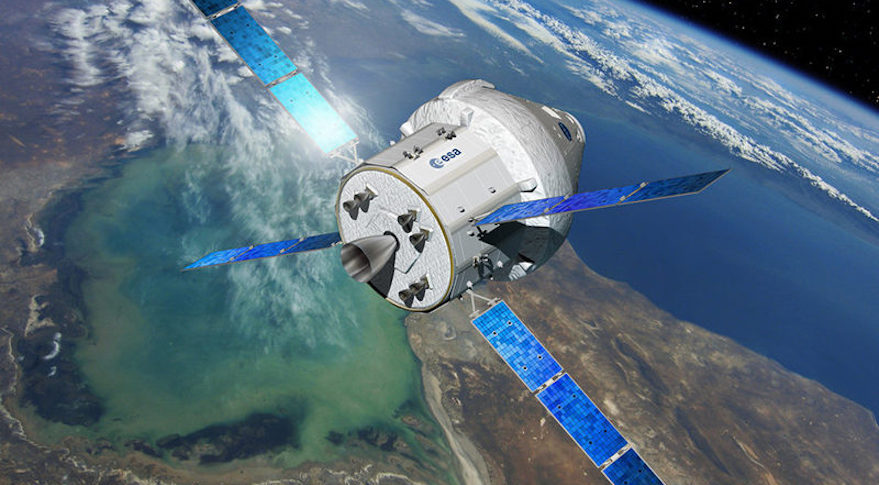
Orion service module: NASA
The service module does what it says on the tin.
It provides air and water for the astronauts and maintains the temperature in the crew compartment.
This European module also generates and stores electricity.
Astronaut Meals
We’ll finish our update with a human touch.
What will the Artemis 2 astronauts eat and drink?
There is no fridge on board Orion so fresh food isn’t an option.
Food must have a long shelf-life and provide a healthy diet for the astronauts.
It must be easy to prepare and eat.
It should not produce crumbs or flakes to float around in the weightless conditions.
So what’s on the menu?

The food selection includes tortillas, flatbread, sausage, beef, broccoli, green beans, macaroni cheese and sauces.
Sweets choice includes granola, chocolate, cookies and cake.
The astronauts do have a say in what food is provided.
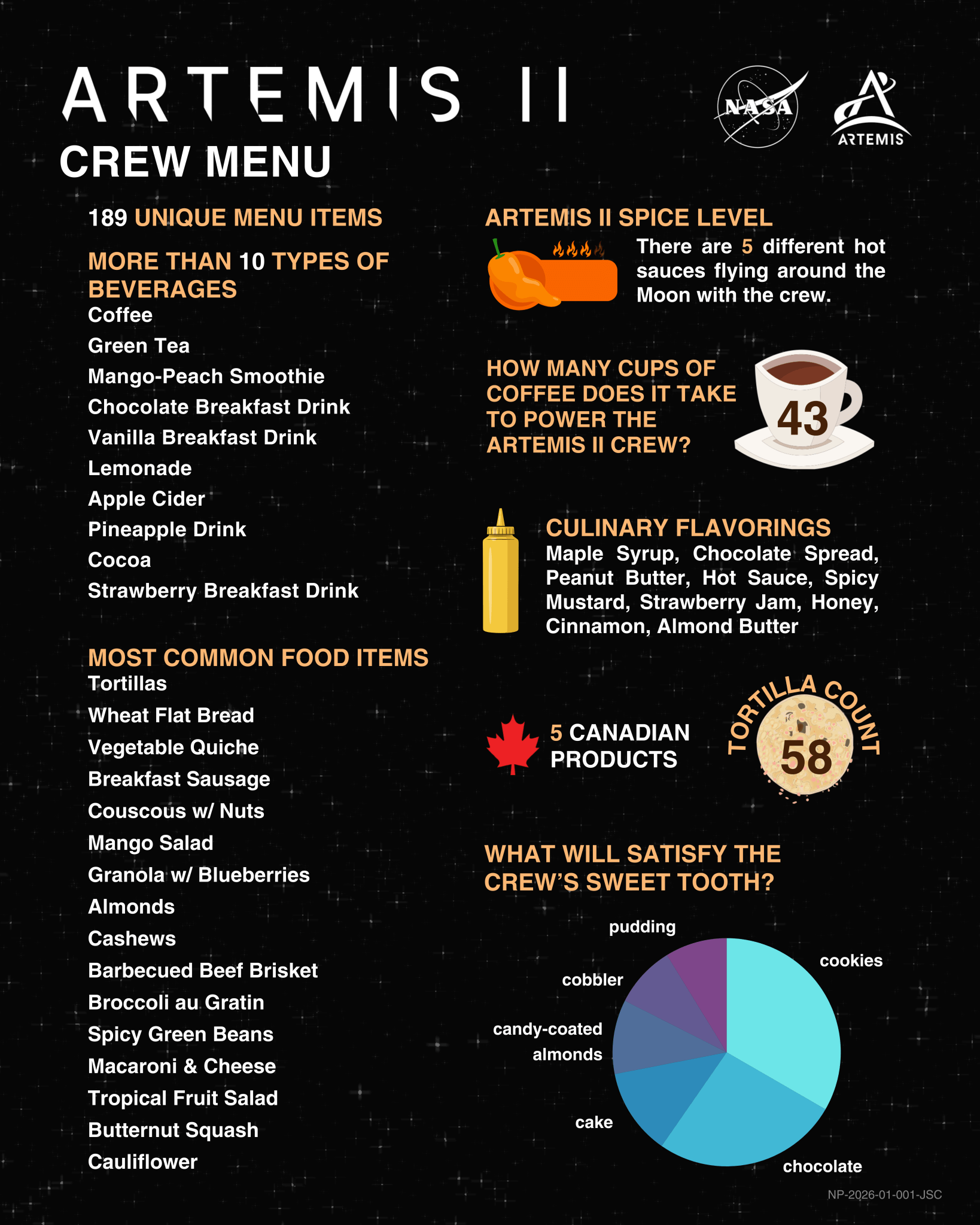
Artemis 2 menu: NASA
There’s a small food warmer and a water dispenser to rehydrate dried food.
It’s not cordon bleu but there’s a satisfying variety of nutritious food to keep the astronauts well fed and happy.
Bon Voyage
Hopefully Artemis 2 will launch safely next month.
It is a momentous mission that marks the start of our return to the Moon.
We wish the four courageous space travellers a safe and successful mission.
Bon Voyage, Artemis 2!

The author: Dennis Ashton, MBE, is a Fellow of the Royal Astronomical Society and a Wonderdome presenter.
In 2024, Dennis received the Special Contribution award from the British Association of Planetaria.
In 2025 he became a Member of the Order of the British Empire for over 50 years work in Astronomy Education.
WonderDome: Leading the Way in Mobile Planetariums
WonderDome offers a fully immersive experience, taking you on a journey through the cosmos. Perfect for all ages and abilities. We now boast a team of 15 presenters, located all over the UK, establishing us as the largest – and best – mobile planetarium organisation in the UK.
Stay Connected for Astronomy News and Events Follow WonderDome mobile planetarium on Twitter / X, Facebook, Instagram and TikTok to stay up to date on the latest news, shows and offers. Or visit our website at wonderdome.co.uk. WonderDome is part of the Service4Education Group