

Don’t go to the Moon!
As I write this blog, we are just days away from the Artemis 2 mission.
This test flight will take four astronauts around the Moon and back to Earth.
The new Moon missions have revived opinions expressed in the 1960s and 70s.
In short, why bother, why go to the Moon?
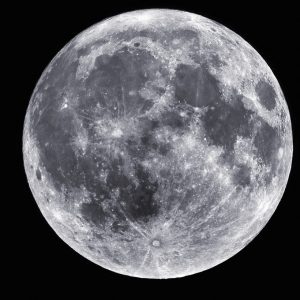
This month’s Sky at Night magazine raised the question again.
A letter writer said that the Artemis missions to the Moon are a ‘waste of space’.
Or more precisely, a waste of money and resources.
That opinion is held by other people as well.
But not by me. I welcome our return to the Moon.
So, why go to the Moon?
The Letter
Here is the letter in full:
Artemis is a complete waste of money and resources.
The Apollo missions produced nothing of value.
It was simply President Kennedy’s vanity project, something to beat the Soviets at.
No beneficial technology came out of it.
We now know that the real drivers were terminals. printers and the F-14.
Artemis is more of the same.
Is that true?
No doubt some people will agree with everything in that letter.
And there’s an iota of truth in it.
For example, President Kennedy admitted that he was not much interested in space projects.
This, despite his memorable speeches (We choose to go to the Moon).
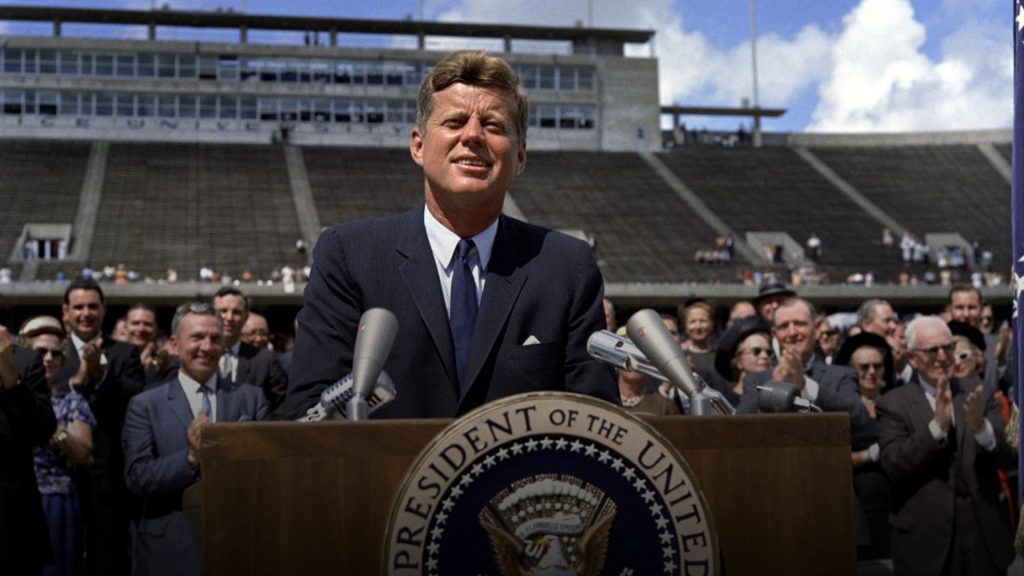
President John F Kennedy, We choose to go to the Moon speech: Space Centre, Houston
True, Kennedy was more interested in putting Russia in its place – behind the USA.
And he was concerned that to achieve this aim, it would be very expensive.
What about the rest of the assertions in the letter?
We’ll start with the money.
The cost of Apollo
Let’s consider the first point, ‘ a complete waste of money’.
It’s true that the Apollo missions of the 1960s and 70s were expensive.
The total cost was something like $25 billion dollars, equal to $175 billion now.
That’s an eye-watering £140 billion.
But that enormous sum of money did not simply disappear down a financial black hole.
Over 400,000 people were employed in the Apollo project.
It gave them highly-skilled and creative jobs.
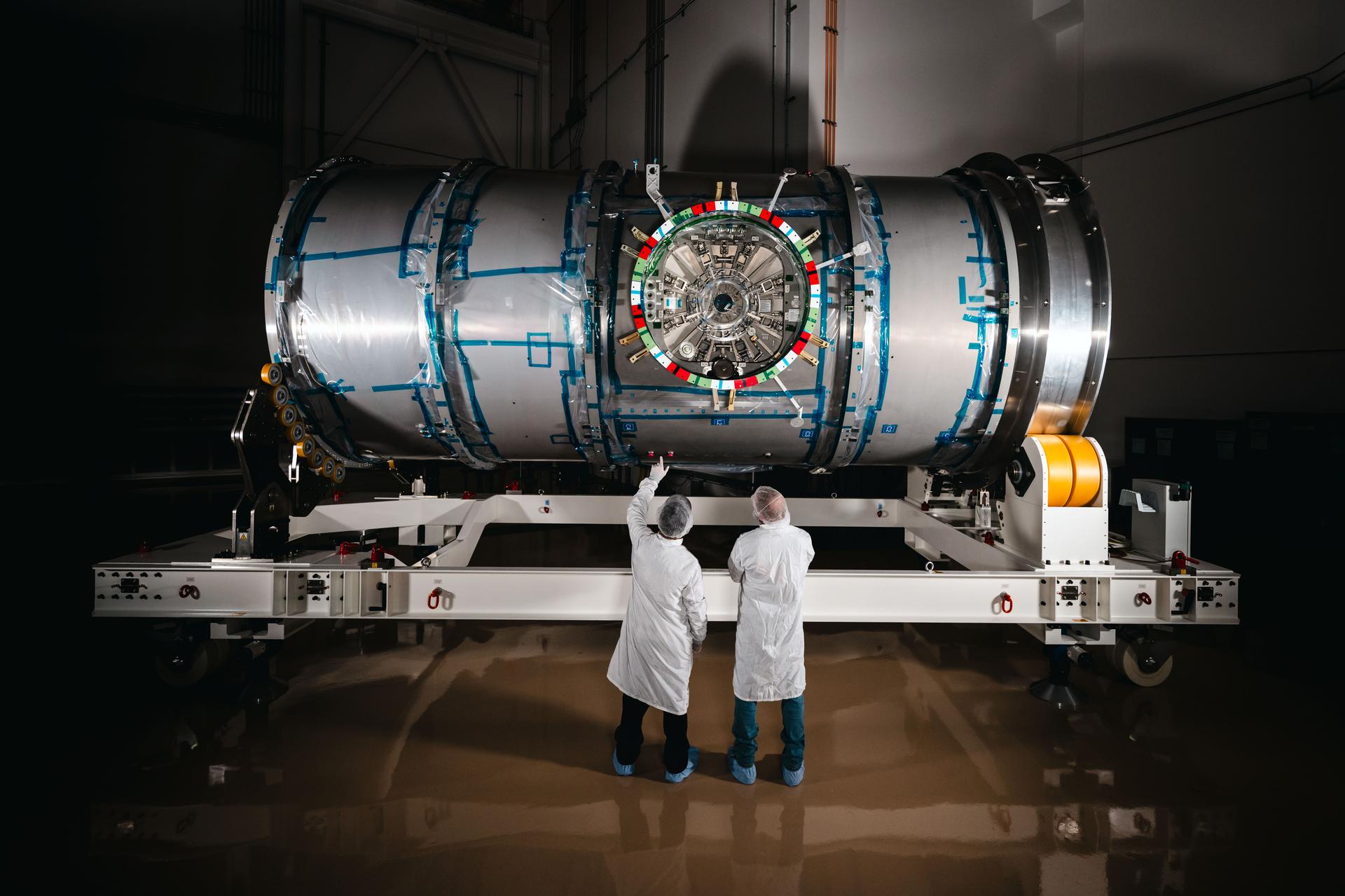
Rocket scientists: NASA
It gave them pay cheques to spend and keep local economies buoyant.
Around that core of NASA workers, millions of working people saw a financial benefit.
The cost of Artemis
The Artemis project will see astronauts landing on the Moon in 2028.
That will be Artemis 4.
The costs up to 2025 were $93 billion. The figure will probably have doubled by 2028.
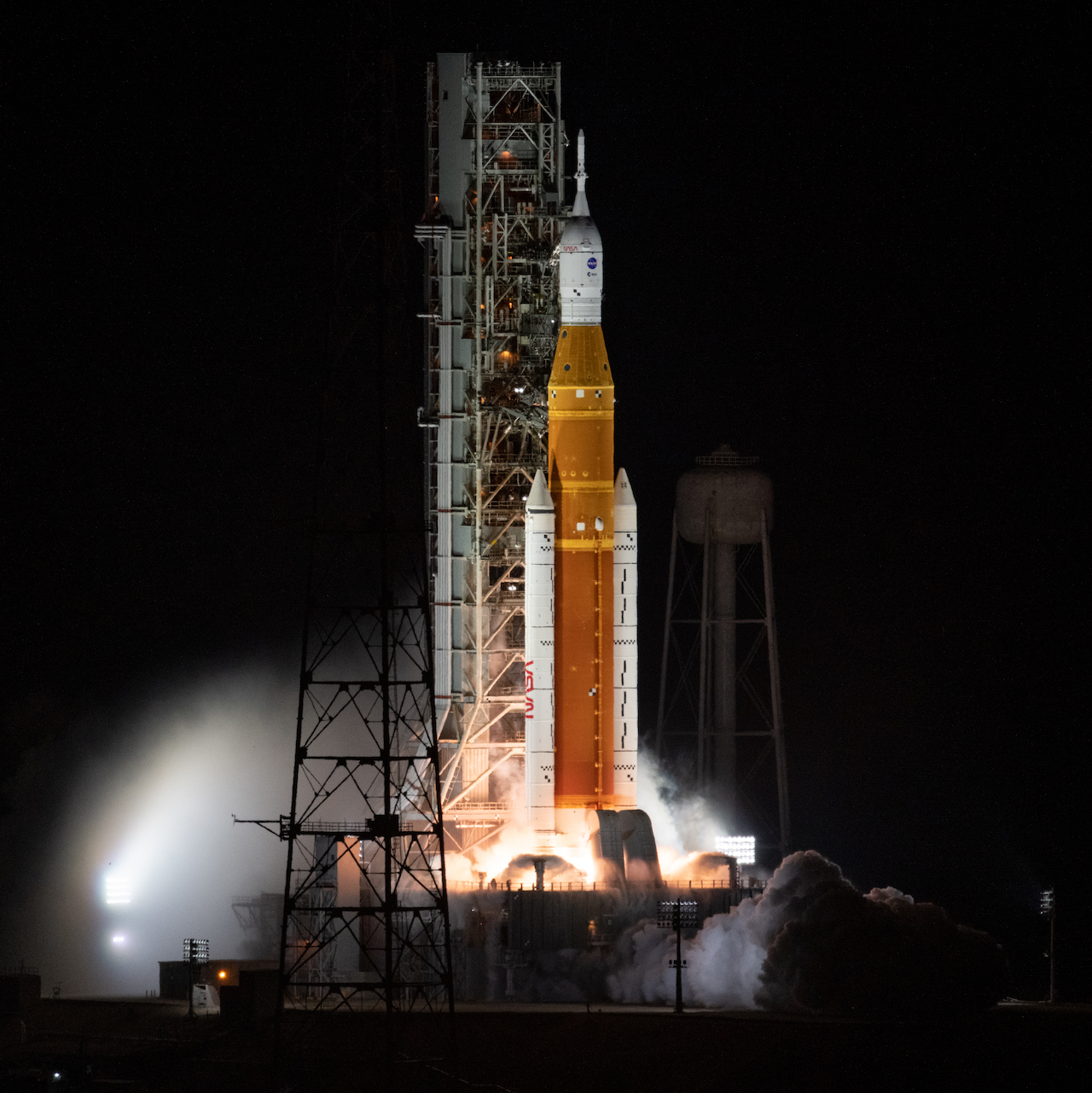
Artemis 1 launch: NASA
But again, the cost doesn’t represent billions of dollars thrown away.
Like Apollo, it creates skilled jobs and technological advances.
Many companies and businesses are involved in the project.
The money earned by their workers goes back into the American economy through spending.
It benefits millions of people.
The money could be spent on health and education
People who oppose the space programme often say that the money could be spent elseware.
Schools and hospitals are often stated as beneficiaries.
The money would fund new schools and hospitals and the teachers, nurses and doctors to staff them.

Vecteezy free image
This naive view assumes that’s where the billions of space dollars would go.
In the cold light of reality , it would be unlikely to happen.
It is more likely to go on missiles to kill people.
Or maybe to fund a president’s White House vanity project.
NASA’s Budget
NASA’s budget for 2026 is 24,438 million dollars.
That’s over 24 billion dollars, a huge sum.
It represents 0.35% of the total expenditure of the USA government.
So for every $100 the government spends, just 35 cents goes on space exploration.
And the NASA budget covers robotic probes and satellites as well as human spaceflight.
Military Budget
By contrast, the USA’s military spend for 2026 is over a trillion dollars.
That’s more than $1,000,000,000,000!
This represents 3.5% of USA’s total government spend, ten times more than it spends on space exploration.
At this moment, the USA is carrying out attacks on Iran.
Tehran, March 27th, 2026.: West Asia News Agency
According to the Centre for Strategic and International studies, the war has cost $16.5 billion in the first 12 days.
How many schools and hospitals could you build for that?
How many nurses, doctors and teachers could you employ?
And spare a thought for the hundreds of people who have been killed.
And for the children who are alive now and will be dead by the time you read this blog.
By contrast, the space programme, including Artemis, is a pioneering scientific venture.
It is undeniably expensive but it’s aims are peaceful.
NASA: cash generator
I’ll conclude with another look at NASA’s budget.
The latest figures show that NASA supported 304,803 jobs throughout the country.
In a single year, NASA generated $75 billion in total ecomic output and paid $9.5 billion in taxes.
So for every hundred dollars that NASA received, it generated three hundred dollars toward the USA’s economy.
Mr letter writer, is that a waste of money and resources? I think not!
Moon missions: ‘nothing of value’
The letter writer maintains that no beneficial technology came out of the Apollo missions.
He maintains that there was, and is, nothing of value in going to the Moon.
I beg to disagree. Lots of great tech was inspired by Apollo.
We see the benefits in everyday life.
Let’s look at a few.
Technological benefits from Apollo
MRI & CT scans
If ever you have an MRI or CT scan in hospital, thank NASA.
The digital technology the scanners use was developed to take images of the Moon.
Camera phones
How many photos have you taken with your phone this week?
Thank NASA for them.
NASA’s Jet Propulsion Laboratory developed a lightweight, small imaging system.
It requires little energy to capture high-quality images from space.
This technology has become standard in cell phones and computer cameras.
Firefighting equipment
Space suits have fire-resistant layers of polymers.
The same polymers have helped create flame-retardant, heat-resistant clothes used by firefighters.
Scratch-resistant lenses
The specs I’m wearing to write this have scratch-resistant lenses.
It’s a great benefit to people like me who wear glasses.
They were first developed by NASA for their space helmet visors.
Memory foam
If you slept well last night on a memory foam mattress, thank NASA.
Memory foam was initially invented as a pad for astronaut seats.
It would mould astronauts’ bodies through the high forces of takeoff and landing and then return to a neutral state.
This eradicated the need to customize seats to different astronauts’ body sizes.
And much more!
I’ve chosen five random technological benefits of the Moon missions.
There are 42 such applications on a Space.com website.
Just click Space.com to see them.
So Mr letter writer, eat your words!
You are wrong.
Lots of advanced technology, from the merely useful to life-saving equipment, came from NASA’s Moon programme.
And finally: Excitement & Inspiration
Just go back and read that letter again.
The writer is simply wrong in almost every point he makes.
But feel the tone, the negative, downbeat attitude it conveys.
Excitement
By contrast Apollo generated interest and enthusiasm all over the world.
As a young adult, I witnessed all the Apollo missions.
I can remember the sheer excitement of watching the launches on TV.
Then viewing in amazement as we saw those grainy black-and-white images of man’s first footsteps on the Moon.
It had actually happened. Humans had walked on the Moon!

Apollo on the Moon: TV image, 1969
Weeks after the first landing, I went to the cinema to see new NASA footage.
This time it was in clear colour film.
The sequence that showed the Eagle lander rejoining the command module was an emotional experience.
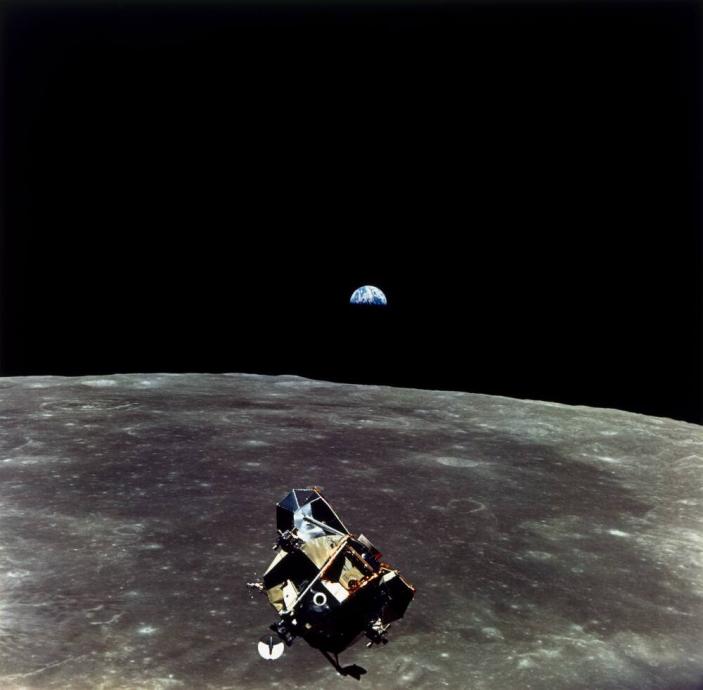
‘Eagle’ lunar lander: NASA
And that sums up human exploration of space.
It is an exciting adventure.
Space exploration fascinates and excites people all over the world, particularly young people.
It shows that nothing is impossible, not even travelling to another world.
The Apollo missions inspired people like me to take an interest in space.
It’s a fascination which can last a lifetime.
In my humble case, it’s taken me into a job which I love and even resulted in a medal from a princess.
For others, the inspiration led to careers in science, engineering and technology.
Apollo was the inspiration for a whole generation.
Maybe Artemis will be the same.
Why go to the Moon?
You have seen my answer to the question.
It gives value in so many ways: advances in technology, excitement, inspiration and adventure.
There is nothing to compare with leaving this Earth and exploring another world.
It is the pinnacle of human achievement.
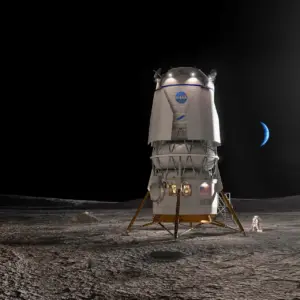
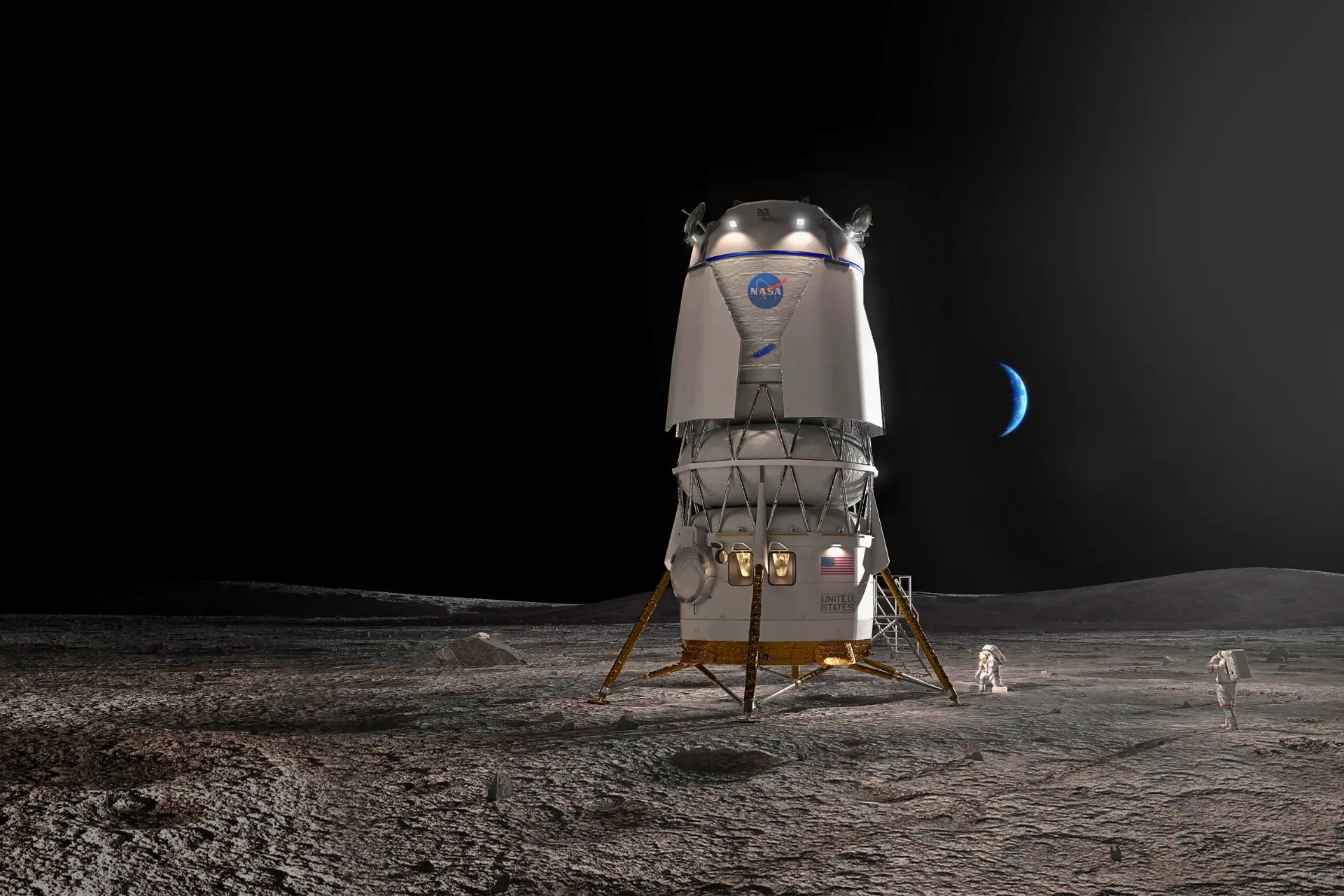
Proposed Blue Origin lunar lander, Artemis 5: NASA
But maybe the best answer to our question comes from another realm.
In 1923, a reporter asked British climber George Mallory why he wanted to climb Mount Everest.
Mallory replied ‘Because it’s there’.
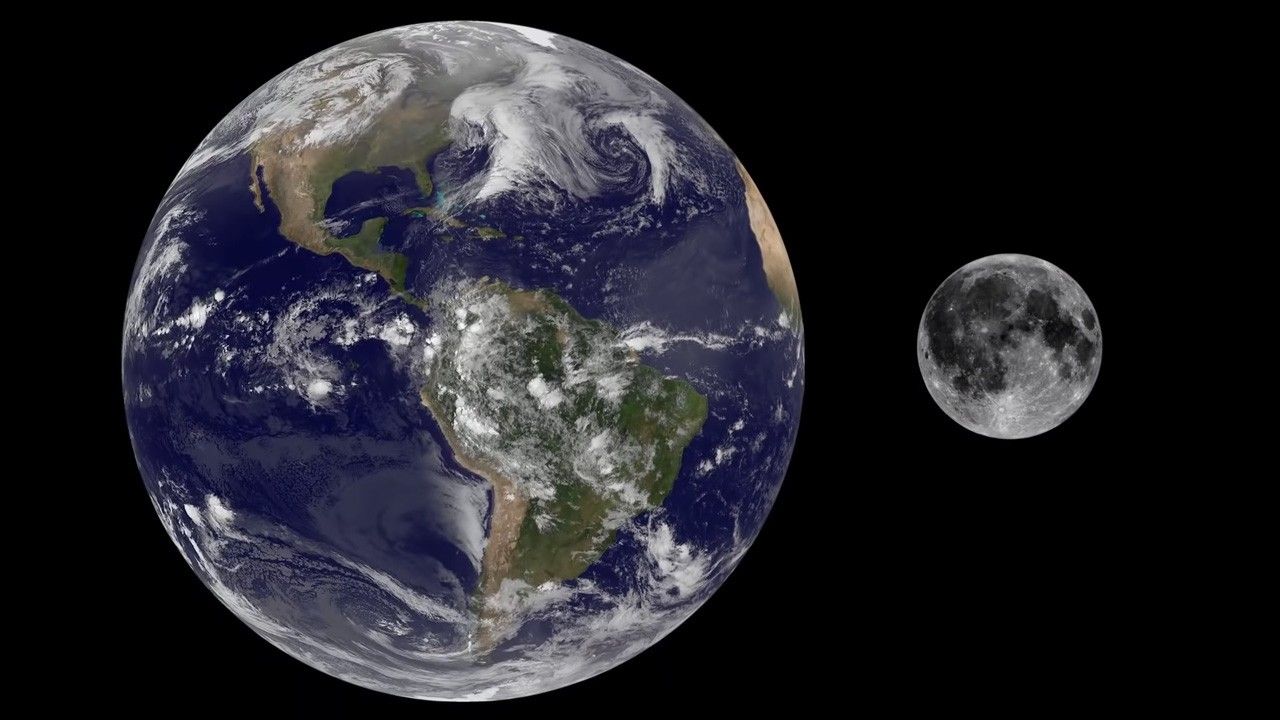
Earth & Moon: NASA Science
That’s really why we should go to the Moon.
Because it’s there.

The author: Dennis Ashton, MBE, is a Fellow of the Royal Astronomical Society and a Wonderdome presenter.
In 2024, Dennis received the Special Contribution award from the British Association of Planetaria.
In 2025 he became a Member of the Order of the British Empire for over 50 years work in Astronomy Education.
WonderDome: Leading the Way in Mobile Planetariums
WonderDome offers a fully immersive experience, taking you on a journey through the cosmos. Perfect for all ages and abilities. We now boast a team of 15 presenters, located all over the UK, establishing us as the largest – and best – mobile planetarium organisation in the UK.
Stay Connected for Astronomy News and Events Follow WonderDome mobile planetarium on Twitter / X, Facebook, Instagram and TikTok to stay up to date on the latest news, shows and offers. Or visit our website at wonderdome.co.uk. WonderDome is part of the Service4Education Group