

For the last eight years, a little spacecraft has been meandering round the inner Solar System.
It has now reached its target.
Bepi Colombo has arrived at Mercury.
Mission Aims
Bepi Colombo is two missions in one.
It will deliver two separate probes to orbit Mercury.
The Mercury Planet Orbiter, MPO, is a European Space Agency project.

It’s cameras will photograph the surface in unprecedented detail.
Other instruments will study the composition of Mercury’s surface.
Meanwhile, a smaller Japanese orbiter, Mercury Magnetosphere Orbiter, MMO, will examine Mercury’s magnetic field.
MMO’s nickname is Mio.

MMO, Mio orbiter: NASA / JAXA
The Journey
Bepi Colombo took its time to travel Mercury.
It was launched on 20th October, 2018.

It has taken eight years to reach the planet.
The craft orbited the Sun 18 times, passing close to Earth and Venus as well as Mercury.
It travelled a total of over 9 billion kilometres, nearly 6 billion miles.

The gravity of Earth and Venus controlled the trajectory of the probe.
Their gravity eventually slowed Bepi Colombo.
It could then enter orbit around Mercury at the correct speed.
The Name
Bepi Colombo is one of my favourite names for a space mission.
It is named for Italian mathematician Professor Guiseppe Colombo, nicknamed ‘Bepi’..
Professor Giuseppi ‘Bepi’ Colombo, 1920 – 1984
Colombo was a pioneer of spacecraft trajectories.
He calculated that probes could be speeded up or slowed down by the gravity of planets.
Gravity-assist was first used for the Mariner 10 mission to Mercury.
It later made possible the Voyager missions to the outer planets.
And, appropriately, gravity assist is being used for the mission named after him.
Arrival
On 3rd September, the two orbiters detached from their parent craft.

The Mercury Transfer Module, MTM, had carried Bepi Colombo for over 9 billion km.
On 21st November, the two craft will go into polar orbit round Mercury.
Their science studies will begin in December.
The mission will go on until April, 2028 but may be extended to December, 2029.
Planet Mercury
Mercury is the smallest planet and the one nearest to the Sun.
Temperature
It is roasting hot on the sunlit side, with a temperature of 430 degrees C.
At night it loses the heat and the temperature plummets to a frigid minus 180 C.
There is no atmosphere to retain the heat.
Size
Mercury is only 2,440 km across, about one-third the width of Earth.
In fact it is not much bigger than our Moon.
Orbit
Mercury speeds around the Sun in just 88 days.
It’s average distance is 58 million km.
But the orbit is eccentric.
Mercury’s distance from the Sun varies between 47 million and 70 million km.
Rotation
Mercury spins round slowly. It’s ‘day’ is 59 Earth days.
Previous missions
Only two previous missions have visited Mercury.
They are NASA’s Mariner 10 and MESSENGER.
Mariner 10
In 1974 and 1975, NASA’s Mariner 10 made three close approaches to Mercury.

Mercury from Mariner 10: NASA
The probe took 27,000 images of the surface, the first ever closeups of Mercury.
It’s path around the planet revealed something of the planet’s interior.
It seems to have a huge core made of solid metal.

Interior of Mercury: NASA
Messenger
It was over 30 years until another probe went to Mercury.
NASA’s MESSENGER mission arrived at the planet in 2011.
The rather contrived acronym stands for MErcury Surface, Space ENvironment GEochemistry and Ranging.

MESSENGER space probe: NASA
Messenger revealed details of Mercury’s surface.
It is heavily cratered from a meteorite bombardment early in its history.

Craters on Mercury: NASA, MESSENGER
The largest impact structure is the Caloris Basin.
This massive feature is over 1,500 kilometres across.

Caloris Basin: NASA, MESSENGER
As I mentioned in another blog, features on Mercury are named for artists, writers and composers.
Now – Bepi Colombo
So what do we expect from the third mission to Mercury?
The most impressive results will be high-resolution photos of the planet’s surface.
ESA’s planet orbiter will photograph the entire planet in great detail.
MPO will also draw a high definition map of Mercury’s topography, using a laser altimeter.
Mio will provide more information about the internal structure of NMercury.
Its findings will shed more light on how the planet was formed 4.6 billion years ago.
By ESA/BepiColombo/MTM
What is certain is that Bepi Colombo will reveal more secrets of this elusive little world close to the Sun.
We’ll keep you updated here.
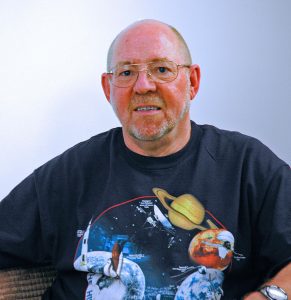
The author: Dennis Ashton, MBE, is a Fellow of the Royal Astronomical Society and a Wonderdome presenter.
In 2024, Dennis received the Special Contribution award from the British Association of Planetaria.
In 2025 he became a Member of the Order of the British Empire for over 50 years work in Astronomy Education.
WonderDome: Leading the Way in Mobile Planetariums
WonderDome offers a fully immersive experience, taking you on a journey through the cosmos. Perfect for all ages and abilities. We now boast a team of 15 presenters, located all over the UK, establishing us as the largest – and best – mobile planetarium organisation in the UK.
Stay Connected for Astronomy News and Events Follow WonderDome mobile planetarium on Twitter / X, Facebook, Instagram and TikTok to stay up to date on the latest news, shows and offers. Or visit our website at wonderdome.co.uk.
WonderDome is part of the Service4Education Group