


On December 14, 1972, astronaut Gene Cernan stepped into a small metal capsule.
The tiny spacecraft blasted off from the Moon.
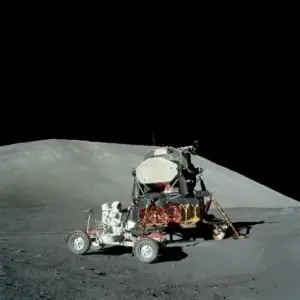
Apollo 17: NASA
Gene Cernan’s footsteps would be the last human imprints on the lunar surface.
But now NASA’s Artemis mission is preparing to return humans to the Moon.
Artemis Overview
Aims
The Artemis programme is designed to land people on the Moon again.
It is further committed to a long-term human presence there.
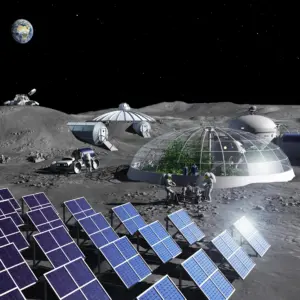
Artemis Base camp, artist impression: NASA
It will see a permanent base constructed on the lunar surface.
This base will eventually be a key part in sending humans on to the planet Mars.
The Name
The Moon landings in the 1960s and 1970s were through the Apollo programme.
Apollo is the Greek god of the Sun and archery.
Artemis is the sister of Apollo and goddess of the hunt.
So, after Apollo, we have Artemis.

Artemis, Vatican: Jean-Pol GRANDMON
The Logo

The Artemis logo has a letter ‘A’ and a red trajectory line from Earth to the Moon.
Missions Timescale
Artemis began with an uncrewed test mission, Artemis 1, in 2022.
The next test is Artemis 2, this time with a crew.
It will carry four astronauts around the Moon – but not landing.
It should take place in February this year.
Our next blog will take a detailed look at the Artemis 2 mission.
The first Moon landing, with Artemis 3, is scheduled for 2028.
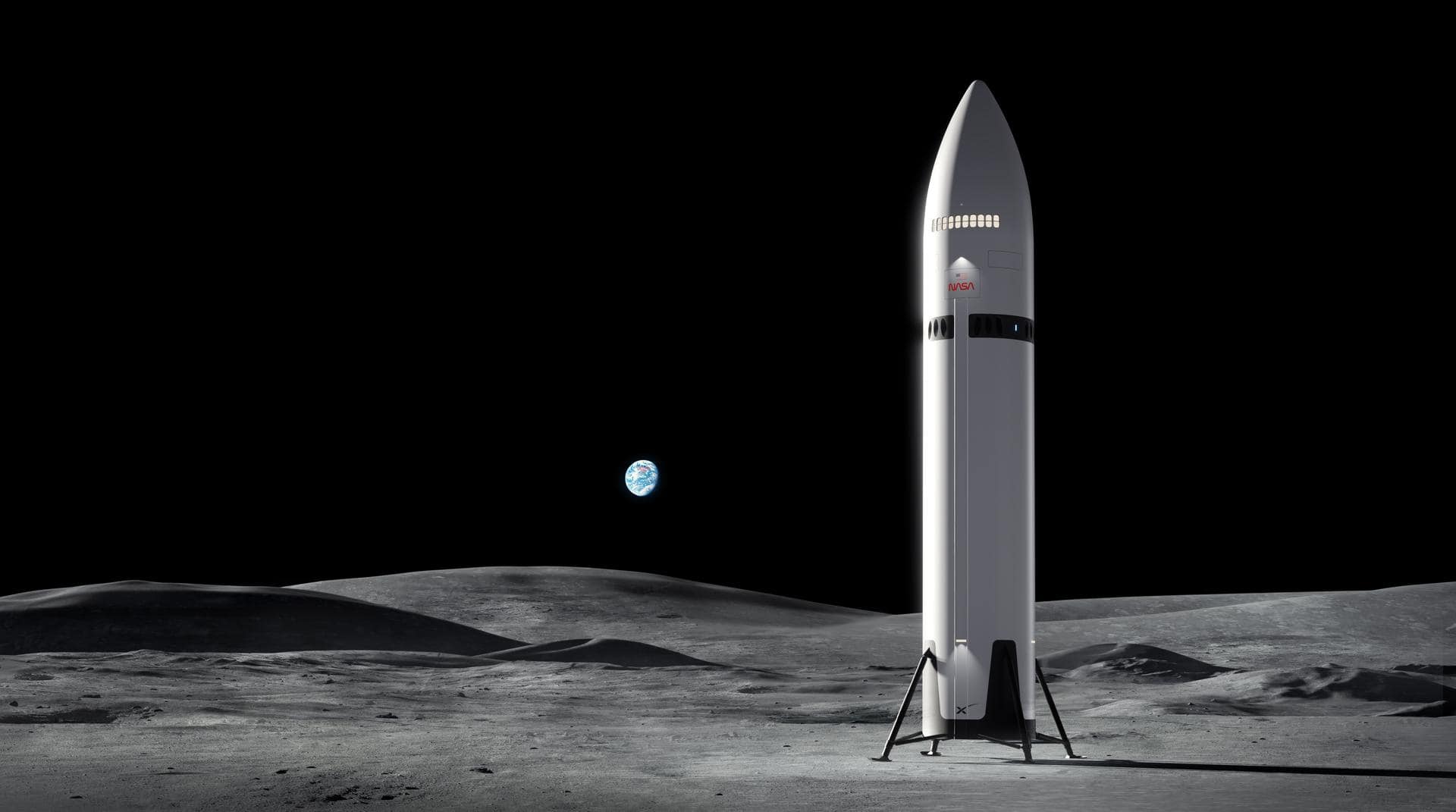
Artemis on the Moon: NASA
By 2030, Artemis 4 and Artemis 5 will see further lunar landings.
These will involve Lunar Gateway, a space station in orbit around the Moon.
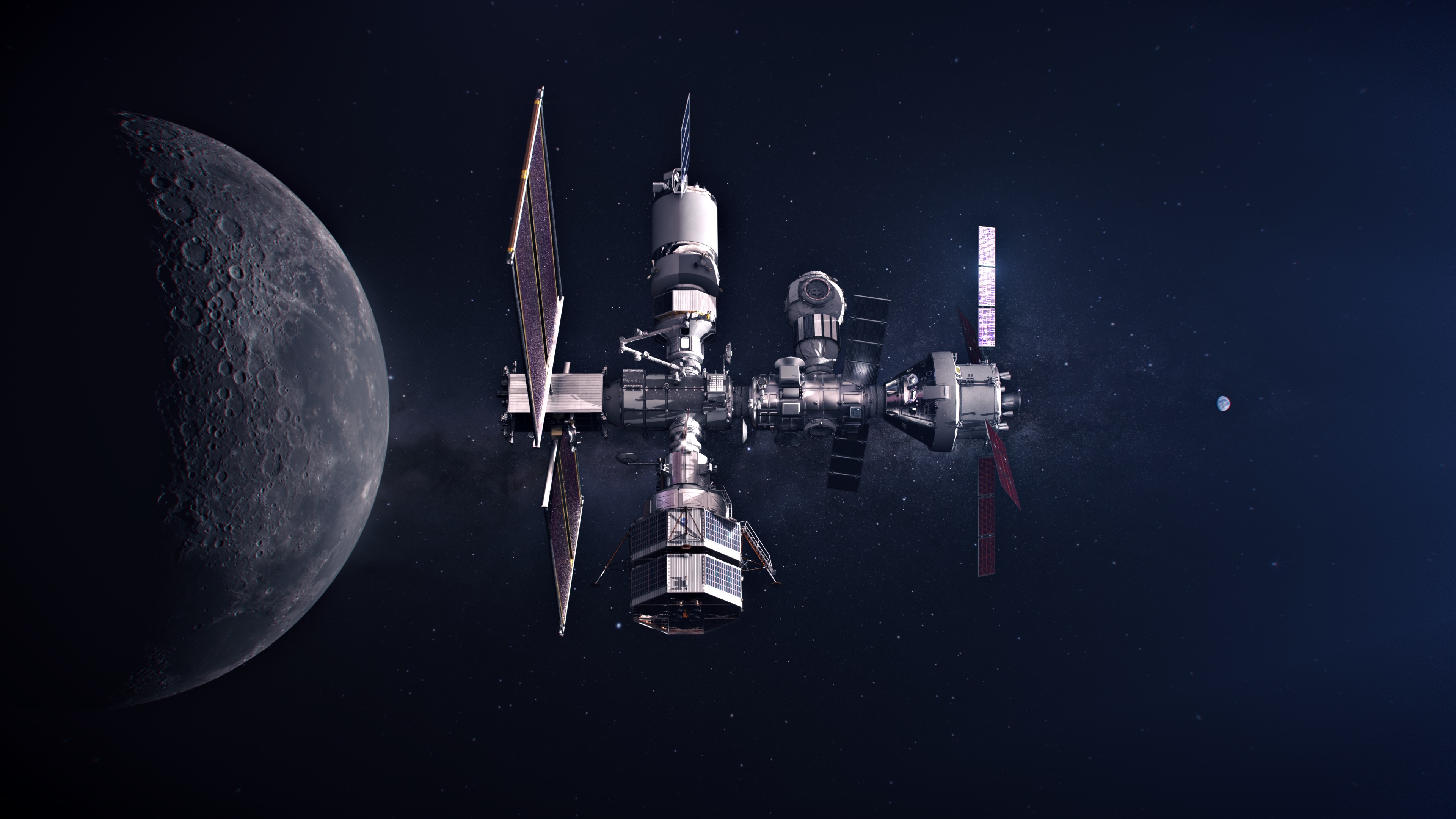
Lunar Gateway: NASA & ESA
Between 2031 and 2035, five more missions will visit the Moon.
These will see a habitation module put in place.
This lunar base will allow astronauts to stay for extended periods on the Moon.

Lunar Foundation Habitat: NASA
These ten missions make up a very ambitious programme.
The concept is costly and will push technology to its limits.
It is inevitable there will be delays, changes and even cancellations as the years roll by.
Landing Site
The lunar landings will be close to the South Pole of the Moon.
NASA has identified several possible areas. One of these will be chosen for Artemis.

Candidate landing sites for Artemis: NASA
Each area on the map is around 15 km x 15km in area.
The actual landing zone will have a 100-metre radius.
The rocket
The primary rocket for Artemis is the Space Launch System, SLS.

Space Launch Sytem, Artemis 1: NASA
SLS owes its design to the Space Shuttle programme.
It has a central core rocket, orange in colour.
Outside are two solid rocket boosters.
Together, the core and boosters will launch the Orion spacecraft to the Moon.
This basic design will be adapted for succeeding missions.
The Spacecraft
The spacecraft which will take astronauts to the Moon is Orion.
It will carry four astronauts, compared to the three of the Apollo missions.
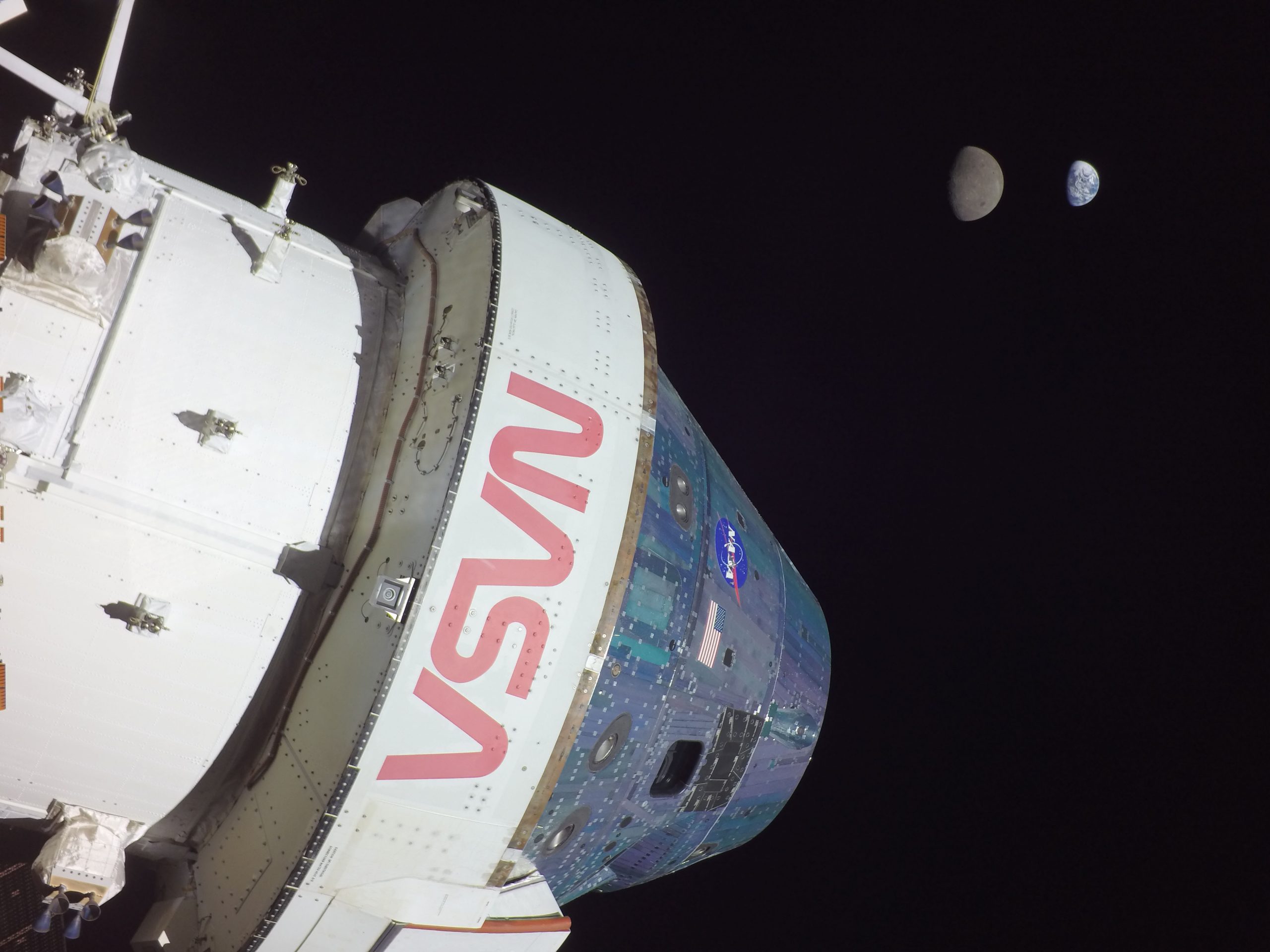
Orion, Moon and Earth, Artemis 1: NASA
Orion has two sections, two modules.
The crew module houses the four astronauts on their three-day journey to the Moon.
After the Moon landing, it will return them to the Earth.
Connected to the crew module is the European Service Module.
This provides the essential power, propulsion and life support for the crew.
The Lander
The first designs of the Moon lander resembled a larger scale Apollo lander.
The one below was designed by Blue Origin.
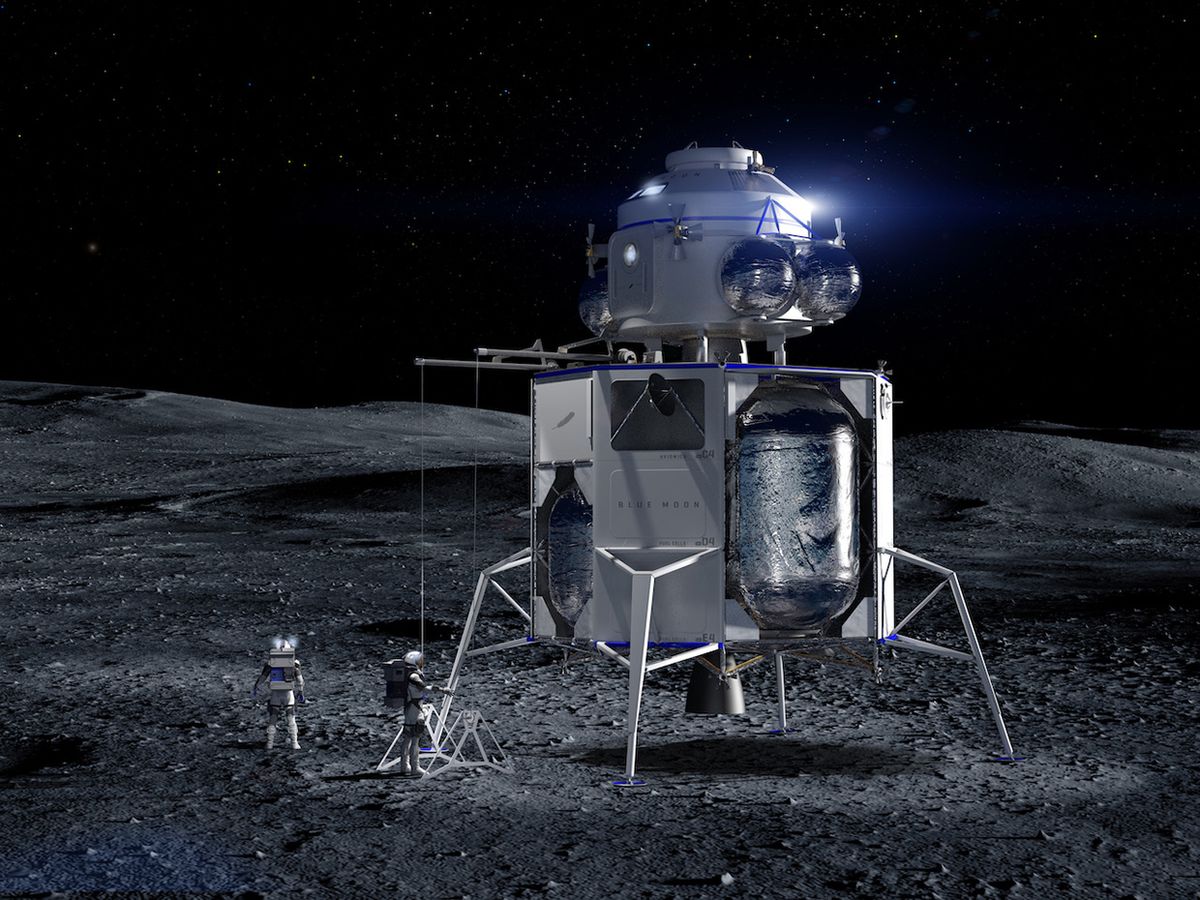
Moon lander: Blue Origin.
Eventually the contract was awarded to Space X.
The Space X Moon lander is a modified Starship.
The Starship lander will be launched before the astronauts blast off on the SLS.
It will then be refuelled in Earth orbit.
The crew will lift off on the SLS and travel to the Moon in Orion.
The astronauts chosen to land on the Moon will transfer to the Starship lander.
After exploring the Moon, the astronauts will leave the Moon in Starship.
They will then join the astronaut(s) onboard Orion for the return to Earth.

If all this sounds complicated, it’s because it is.
And to add to the complexity, Space X is behind in getting the lander ready.
So in October 2025, NASA opened the contract up to other companies.
It seems that the landing craft could be the source of delay for the Artemis programme.
Lunar Gateway
Later missions, Artemis 5 to 10, will involve Lunar Gateway.
This is a space station in orbit round the Moon.
It will be assembled by astronauts and become the first space station not in orbit round Earth.
Gateway will be a way station for Artemis astronauts.
It will also provide a communications hub and science outpost.
In the longer term, it will provide a key stepping stone for a mission to Mars.
Lunar Gateway is funded by several nations.
As well as NASA and ESA, they include Canada, Japan and the UAE.
The Astronauts
We do not yet know the names of the astronauts who will next walk on the Moon.
NASA has committed itself for greater diversity.
Artemis will see the first woman and person of colour set foot on the Moon.
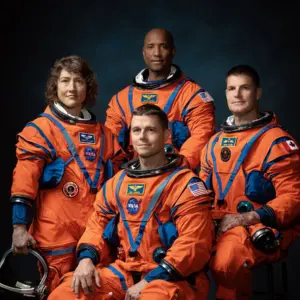
Artemis 2 astronauts: NASa
We do know the four astronauts for the upcoming Artemis 2 mission.
They are Christina Koch, Victor Glover, Reid Wiseman and Jeremy Hansen.
Their 10-day mission will fly around the Moon before returning to Earth.
Our next blog will take a closer look at Artemis 2 before its launch in February.
Latest News
On December 18th, 2025, President Donald Trump signed an Executive Order on American space policy.
It sets the target of the Artemis 3 Moon landing for 2028.
This, says Trump, will ensure America’s space superiority.
China has set a target of landing its astronauts on the Moon by 2030.
Coming Next
If all goes well, Artemis 2 will blast off on its test mission in the next few weeks.
Our next blog will take a close look at the mission – the spacecraft, the astronauts and the mission aims.
We’ll also let you know how you can go on the mission – in name at least!

The author: Dennis Ashton, MBE, is a Fellow of the Royal Astronomical Society and a Wonderdome presenter.
In 2024, Dennis received the Special Contribution award from the British Association of Planetaria.
In 2025 he became a Member of the Order of the British Empire for over 50 years work in Astronomy Education.
WonderDome: Leading the Way in Mobile Planetariums
WonderDome offers a fully immersive experience, taking you on a journey through the cosmos. Perfect for all ages and abilities. We now boast a team of 15 presenters, located all over the UK, establishing us as the largest – and best – mobile planetarium organisation in the UK.
Stay Connected for Astronomy News and Events Follow WonderDome mobile planetarium on Twitter / X, Facebook, Instagram and TikTok to stay up to date on the latest news, shows and offers. Or visit our website at wonderdome.co.uk. WonderDome is part of the Service4Education Group