

September marks a change in seasons on Earth.
In the UK, summer is gradually changing to autumn.
September is also a month of space memories.
In this blog we’ll look back at Septembers in space.
Here are my top 5 September space dates.
1977: Voyager 1 launch
On September 5th 1977, humanity’s greatest journey began.
NASA launched the Voyager 1 spacecraft.
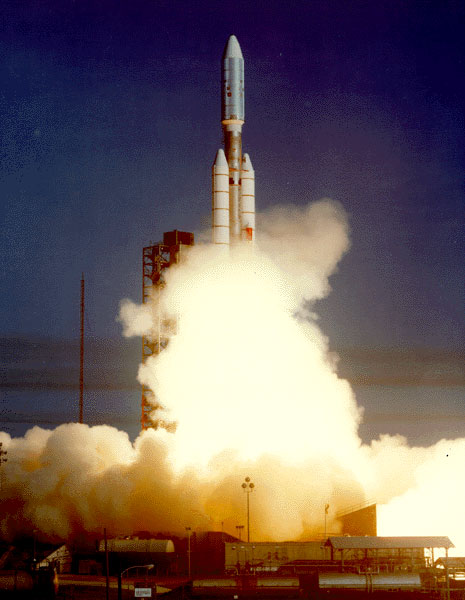
Voyager 1 launch: NASA
Actually, Voyager 1 launched two weeks after its twin space probe, Voyager 2.
The flight began at Launch Complex 41 at Cape Canaveral, Florida.
The probe was launched by a Titan 3 rocket.
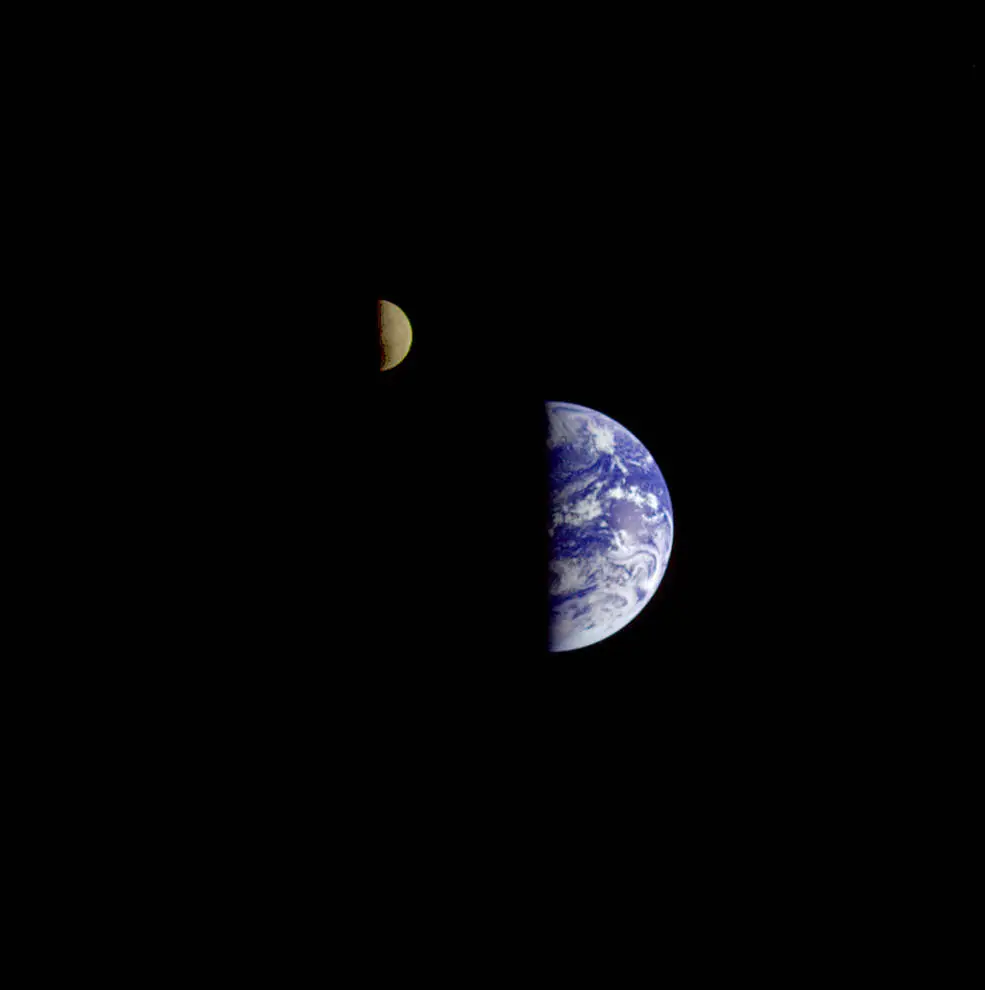
On September 18th, it took the first ever image of the Earth and Moon together in space.
Earth and Moon from Voyager 1: NASA
Voyager 1 would go on visit Jupiter and Saturn and some of their Moons.
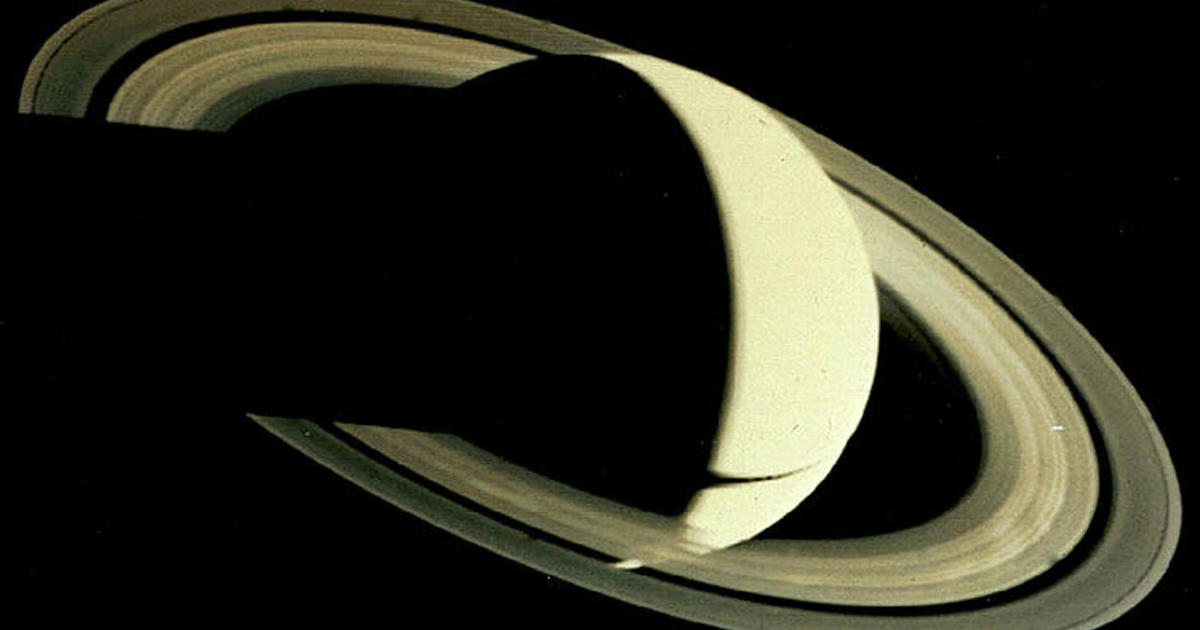
Saturn from Voyager 1: NASA
The Voyager missions gave us the closest views of the four gas giant planets.
They also revealed the big moons as worlds in their own right.

Jupiter and Galilean moons collage: NASA
Voyager 1 is now 16 billion miles away from Earth.
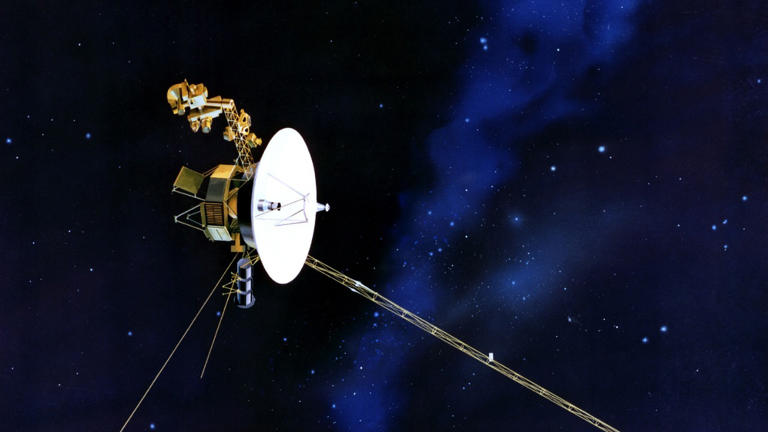
It is the furthest outpost of humanity in space.
At this distance, signals from the space craft take 24 hours, a full day to reach us.
Voyager is one light day away.
2. 1962: President Kennedy’s Moon Speech
‘We choose to go to the Moon’.
At Rice University in Texas, American President John F Kennedy gave the most inspirational speech of the Space Age.
It still brings a tingle to my spine.
JFK announced that America would send men to the Moon.

‘We choose to go to the Moon in this decade, and do the other things, not because they are easy but because they are hard’.
You can see a transcript of his entire speech here.
Or watch the key part on Youtube.
When JFK made his speech, NASA was hardly prepared to send men to the Moon.
It had no Moon rocket, no Moon lander, no launch infrastructure, no astronauts.
Yet Kennedy’s ambition was realised in July 1969, when Apollo 11 touched down on the Moon’s surface.

Apollo 11, Eagle lander on the Moon: NASA
Tragically, JFK did not live to see mankind’s greatest achievement, the one he had inspired.
He died in Dallas on November 22nd, 1963, killed by an assassin’s bullet.
Many dreams died with him in the nightmare of that day.
But his Moon ambition was realised before the end of the decade.
3. 1846: Discovery of Neptune
September 23rd, 1846 saw one of the most important astronomical discoveries ever.
We found a another planet orbiting the Sun.
But that is not the most significant aspect of the discovery.
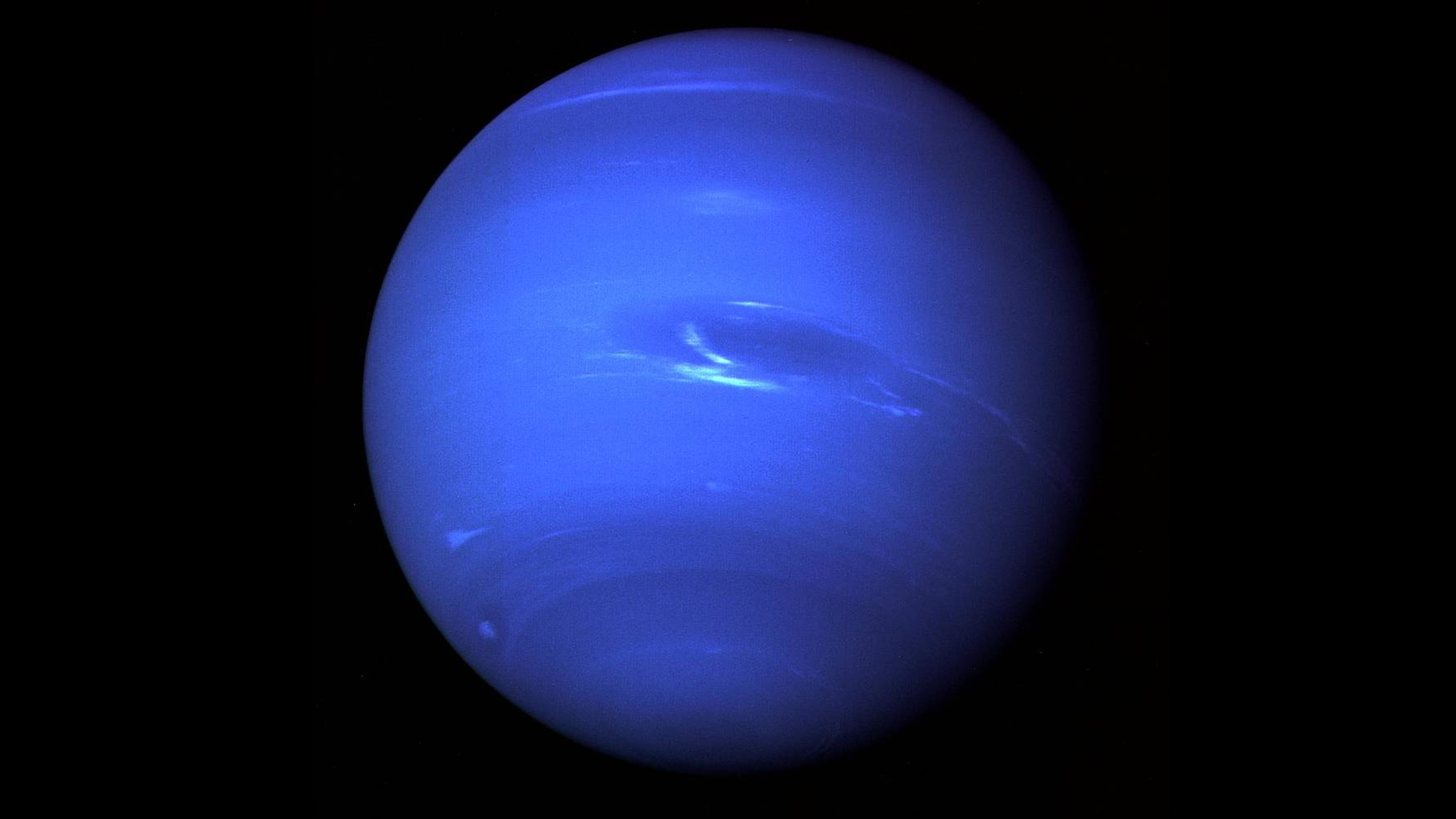
Planet Neptune: NASA / Voyager 2
Mathematics predicted the existence – and position – of Neptune before it was seen.
The story begins with the discovery of Uranus in 1781.
It was found by William Herschel using a telescope.

Uranus, telescope view.
By 1846, Uranus had completed an orbit around the Sun.
But astronomers had noticed irregularities in its orbit.
These could be explained by the existence of another, unknown planet beyond Uranus.
Two astronomers, Urbain Le Verrier in Paris and John Couch Adams in Cambridge, did some calculations.


Urbain Le Verrier John Couch Adams
They were working independently and both came up with a position for the ‘new’ planet.
Using Le Verrier’s calculation, Johann Galle searched for it using the Fraunhofer telescope at Berlin Observatory.
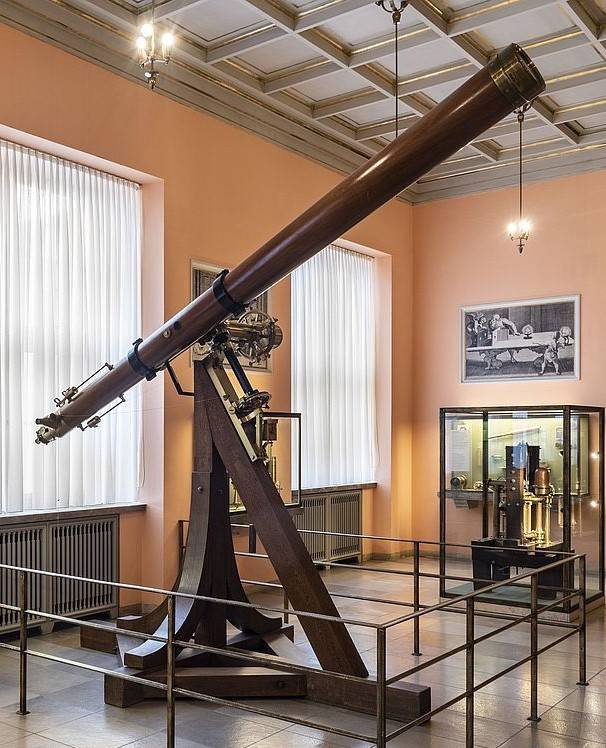
Fraunhofer telescope in Berlin: Credit Deutches Museum
On the night of September 23rd, Galle found the planet close to its predicted position.
Both Le Verrier and Couch Adams are now credited with the discovery.
Ironically, Neptune had been observed several times before, including by Galileo.
Because of its slow movement across the sky, it had been regarded as a blue star, not a planet.
4. 1959: Luna 2 hits the Moon
We now take it for granted that we can land robots on the Moon and planets.
But in 1959, such landings were still science fiction.
It had never been done. And it did prove very difficult to do.
The Russians were at the forefront at this stage in the Space Age.
Their first three attempts to land on the Moon all failed.
They didn’t even give the spacecraft names.
The fourth attempt, Luna 1, got as far as the Moon – but missed it by 3,700 miles.
Then came Luna 2.
Luna 2 was a spherical space probe with antennae.
It carried 5 scientific instruments.

Lunar and the Moon. Credit: Times of India
The spacecraft took a direct path to the Moon.
It reached the Moon 36 hours after launch.
But it did not land softly, it wasn’t designed to.
Luna 2 crashed into the lunar surface travelling at 7,400 mph.
The impact was to the east of the Mare Imbrium.
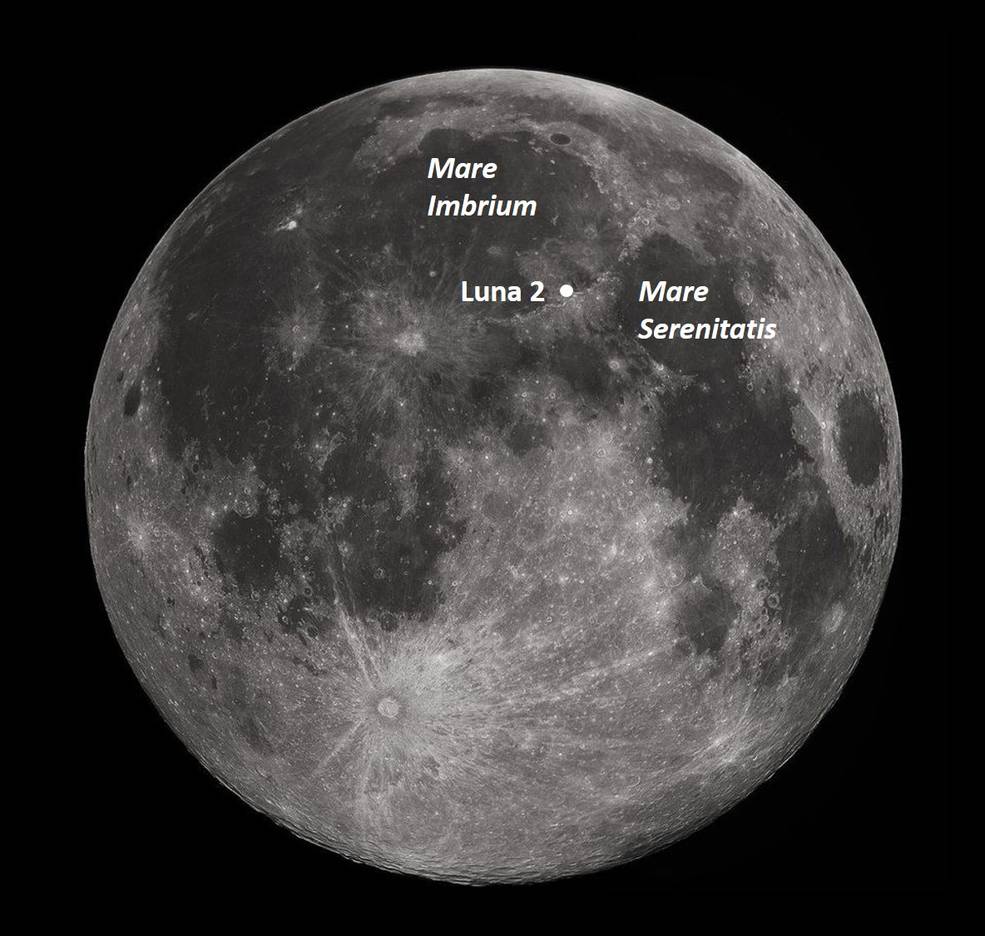
Impact site, Luna 2
Just before the impact, Luna 2 released two metal spheres.
The spheres then exploded, scattering 5-sided shields on the Moon.
The pennants carried the date and their Russian origin ‘CCCP’.

Luna 2 titanium sphere.
So Luna 2 became the first human-made object to make contact with another world.
It would be the first of many, including our next important September space event.
5. 1976: Viking 2 lands on Mars
Viking 2 was part of a NASA programme to land machines on Mars.
It followed Viking 1, which touched down on the red planet in July 1976
It was the first ever successful Mars lander.
Viking 2 was launched on September 9th, 1975.
Its journey to Mars took 333 days.
The probe had two parts.
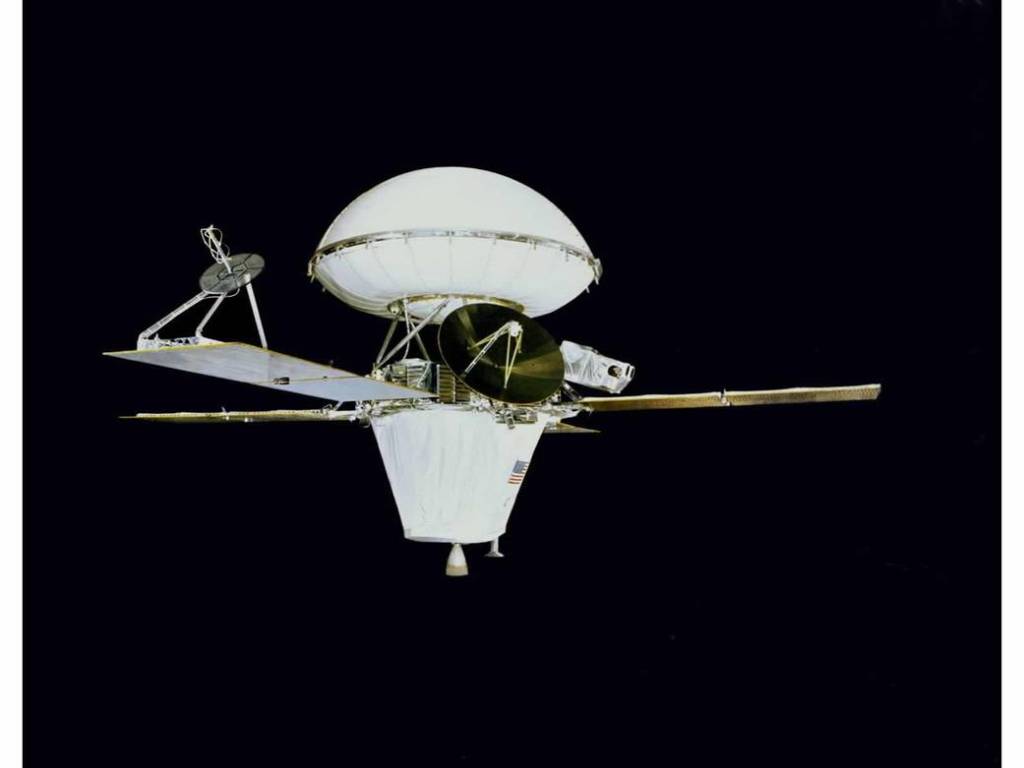
Viking 2 orbiter: NASA
The Viking orbiter would go on to travel around Mars 700 times.
In its 2-year lifetime, the orbiter returned 16,000 images of Mars.
The lander separated from the orbiter on September 3rd, 1976.
It touched down in Utopia Planitia, the largest impact basin on Mars.
The lander was the size of a small car.
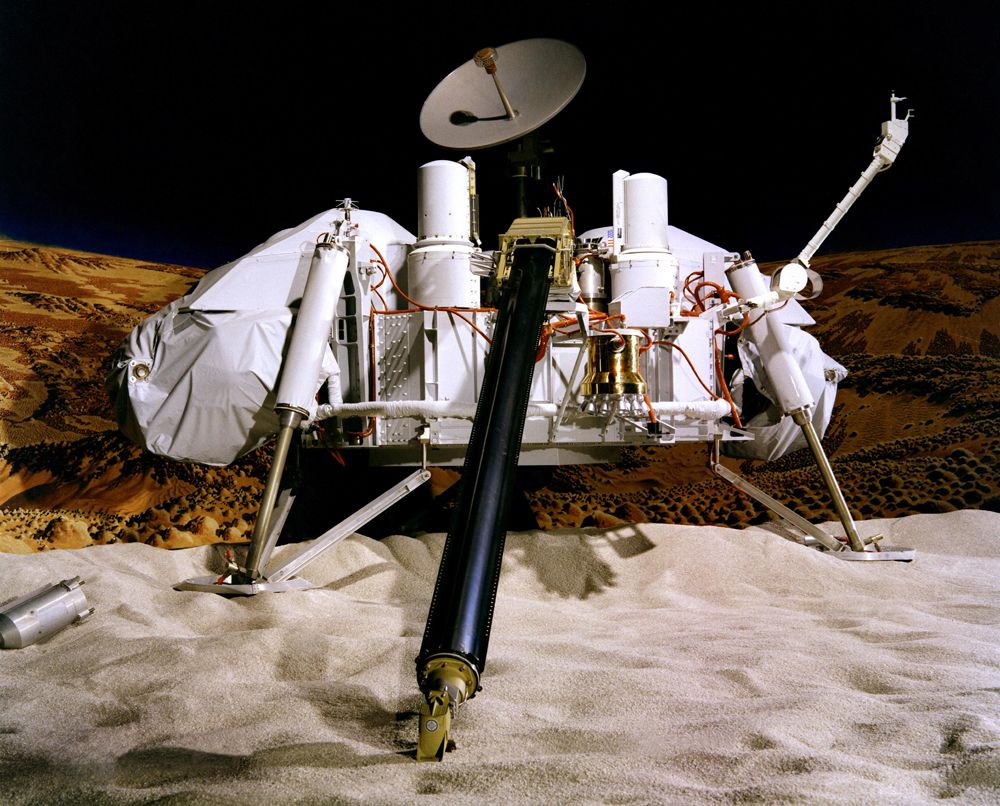
Viking 2 lander: NASA
Shortly after touchdown, Viking 2 started sending superb images.
The craft was powered by radioisotope generators.
Martian surface from Viking 2: NASA
The batteries finally failed on April 12th, 1980.
Viking 2 had completed its mission.

Frost on Mars, Viking 2: NASA
The Viking missions were very successful.
They revealed a mountain of data about Mars.
In all, the two missions returned 52,633 images of Mars and mapped 97% of its surface.
The two landers gave us 4,500 pictures of the Martian surface.
September Space
So there are my top five space events in September.
I can remember four of them, I just missed the discovery of Neptune!
What will this September and future Septembers bring?
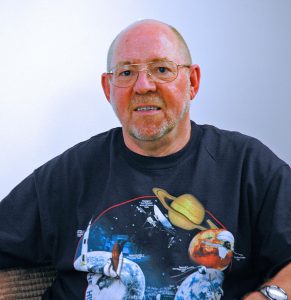
The author: Dennis Ashton, MBE, is a Fellow of the Royal Astronomical Society and a Wonderdome presenter.
In 2024, Dennis received the Special Contribution award from the British Association of Planetaria.
In 2025 he became a Member of the Order of the British Empire for over 50 years work in Astronomy Education.
WonderDome: Leading the Way in Mobile Planetariums
WonderDome offers a fully immersive experience, taking you on a journey through the cosmos. Perfect for all ages and abilities. We now boast a team of 15 presenters, located all over the UK, establishing us as the largest – and best – mobile planetarium organisation in the UK.
Stay Connected for Astronomy News and Events Follow WonderDome mobile planetarium on Twitter / X, Facebook, Instagram and TikTok to stay up to date on the latest news, shows and offers. Or visit our website at wonderdome.co.uk.
WonderDome is part of the Service4Education Group