

The 12th of August is known as the ‘Glorious Twelfth’.
This year it’s a great day for sky watchers.
Not for shooting grouse but for shooting stars.
And before the meteors, there’s an eclipse of the Sun!
In our previous blogs we’ve looked at past solar eclipses and how to view safely.
Now we’ll look in detail at where and when to view the eclipse in the UK.
When?
August 12th. The Moon begins to cross the Sun at around 6.15pm.
Maximum eclipse is at around 7.10pm.
The Moon leaves the Sun’s disc at around 8.10pm.
As you can see, it’s a late afternoon / evening event.
You can get your local times at Time and Date.
Where?
The eclipse will be seen all over the UK, weather permitting.
But you’ll need to choose your observation place carefully.
The eclipse happens late in the day, as the Sun begins to set.
So you will need a location looking west.
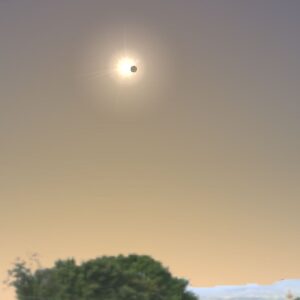
Eclipse start, looking west from Sheffield, 6.13pm: Stellarium
Because the Sun will be low in the sky, you need a low, clear horizon looking west.
Ideally you should be on a hill, looking down towards sunset.
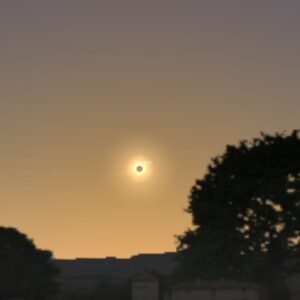
Maximum eclipse, looking west from Sheffield 7.10pm: Stellarium
What you’ll see
At around 6.15, the Moon will start it’s traverse of the Sun’s disc.
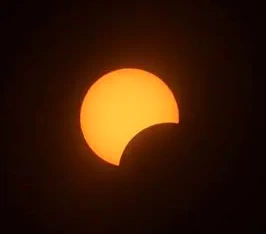
By around 7.10pm, the Moon will cover about 90% of the Sun.
This is maximum eclipse for the UK.
Through your eclipse spectacles, it will look like an upside down ‘smiley face’.
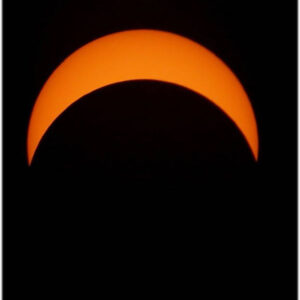
So for us in the UK it’s a partial eclipse, a deep one.
But it will not go completely dark, like in a total eclipse.
However the light change will be noticeable, like going from sunshine to cloudy.
The Moon continues its slow crossing and leaves the Sun around 8.10pm.
By then it’s almost on the horizon, with sunset about 8.20pm.
That’s why you need a low, clear horizon looking west.
Be Safe!
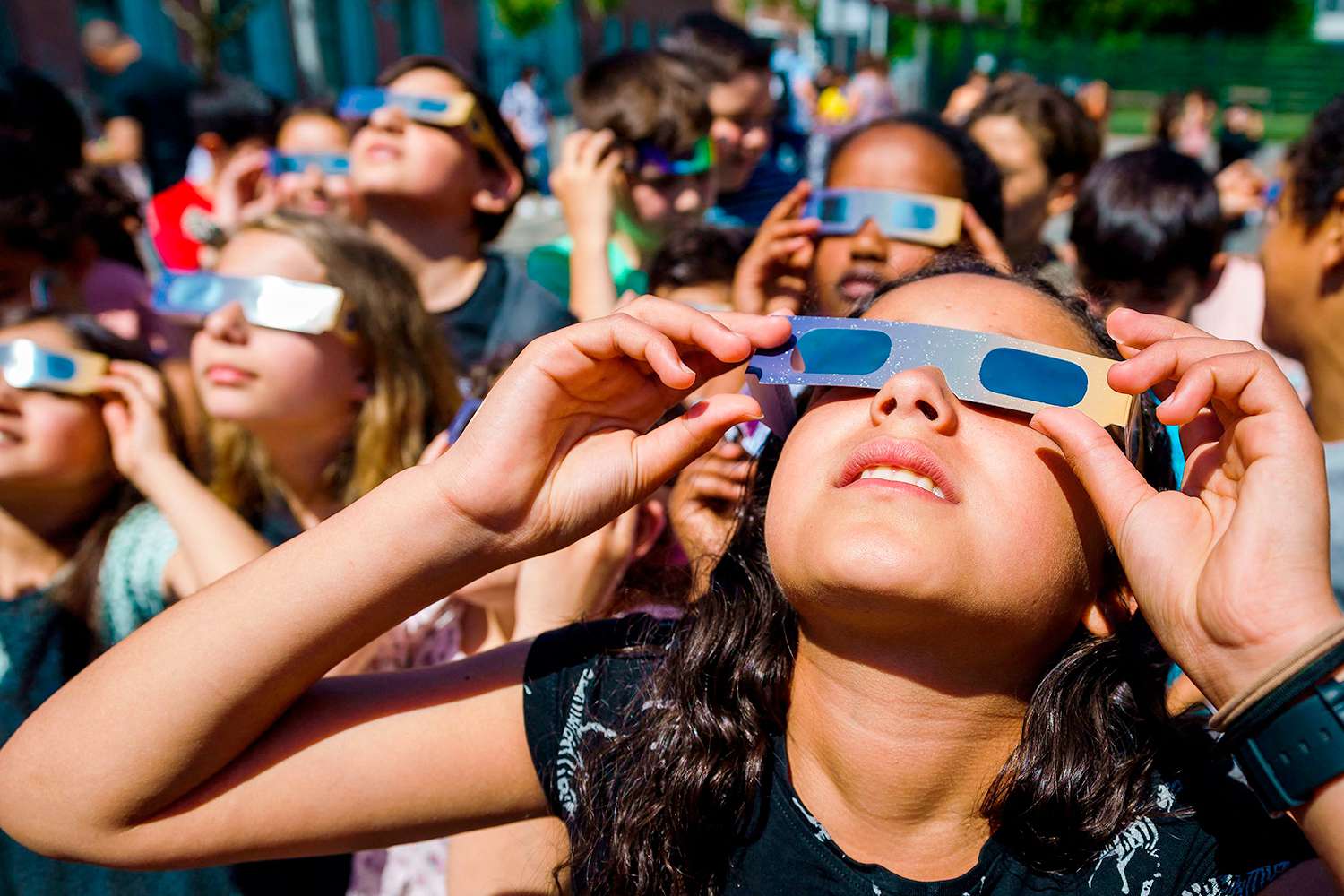
Looking directly at the Sun can damage your eyes.
Please make sure that you watch the eclipse with eye safety in mind.
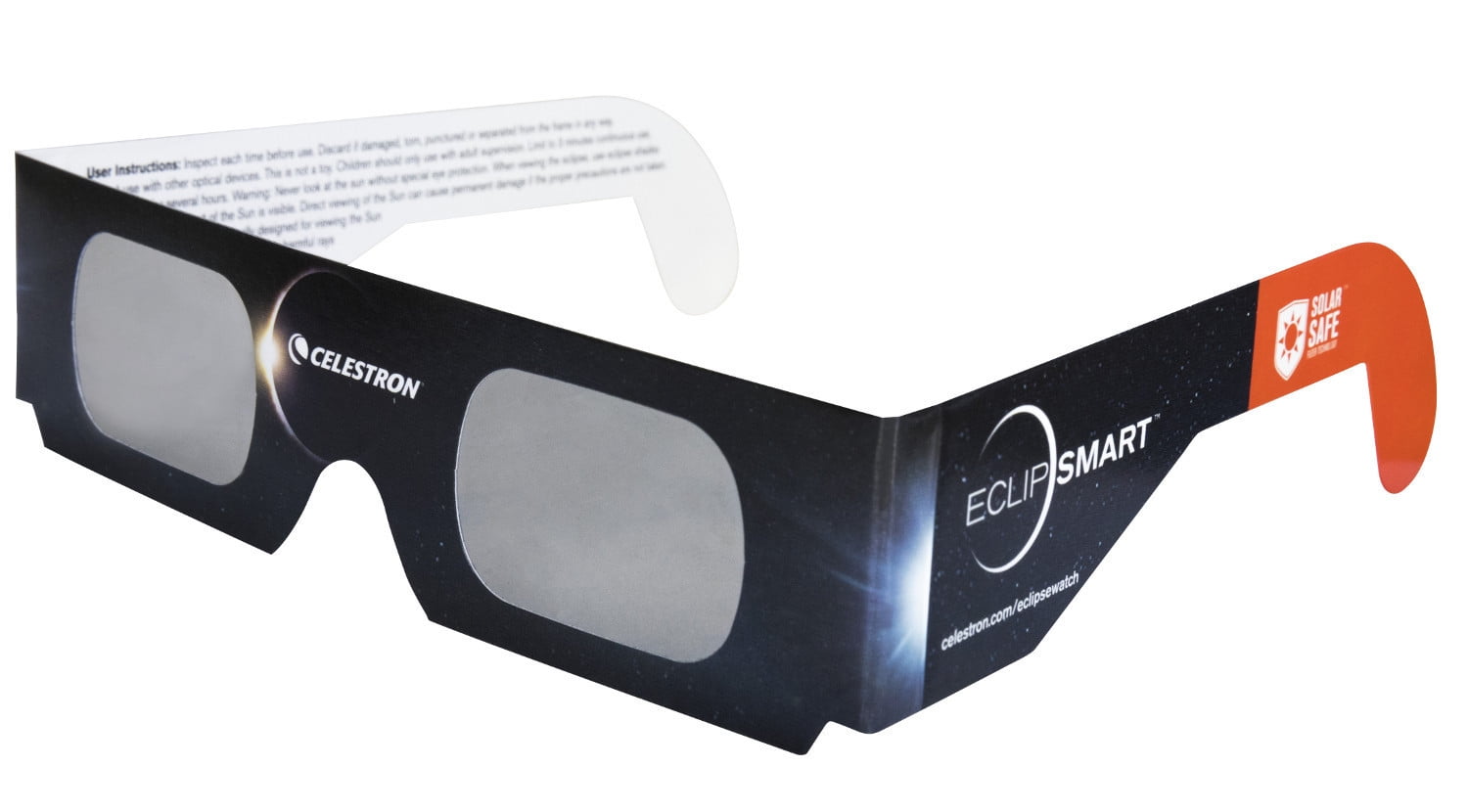
The simplest way is to buy eclipse spectacles.
Their filters will give you a great view and keep you safe.
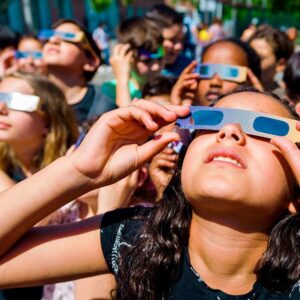
Eclipse viewing: NASA
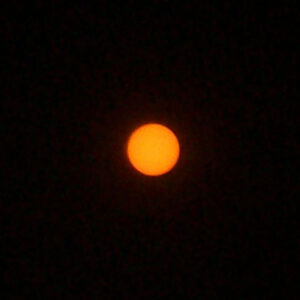
Sun seen through eclipse glasses.
There are other safe observing methods.
Our last blog described several ways to observe the eclipse.
Please take a look and see what’s best for you.
Total Eclipse
To see the total eclipse, you’ll have to leave the UK.
Totality passes through Greenland and Iceland early in the day.
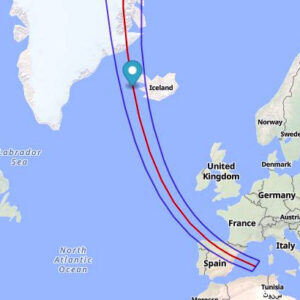
After crossing the Atlantic, the Moon shadow tracks across northern Spain.
If you are lucky enough to be in Spain, it’s worth travelling for totality.
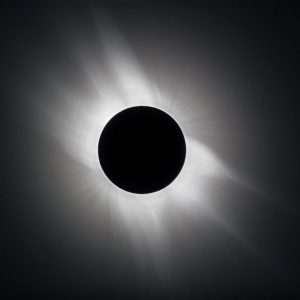
To find the best locations, click on Eclipse Spain.
Shooting Stars
We’re not finished with astronomical events on August 12th.
After the eclipse, after sunset, the shooting stars will arrive.
This display, the Perseid meteor shower is one of the best of the year.
The cause
Every year on August 12th to 13th, the Earth passes through a trail of space dust.
This dust was left by the passage of Comet Swift-Tuttle.
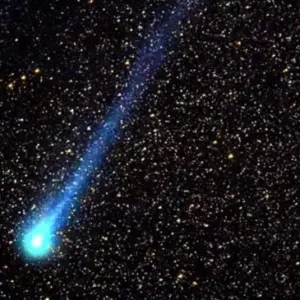
Comet Swift-Tuttle: NASA
The particles of dust burn up to give a display of meteors, shooting stars.
The dust trail is quite narrow.
The particles hit the atmosphere in the direction of the constellation Perseus.
So they’re called the Perseid meteors.

Perseid meteors: Jbout
Where to look.
The meteor trails shoot across all parts of the sky.
Most are seen overhead, where the sky is darkest.
When to look.
Perseus rises at around 10pm.
You may see shooting stars any time after this.
But the best time is after midnight.
This year the peak of the shower is expected at about 3am, early morning 13th August.
How to observe.
You don’t need any special equipment. It’s your eyes only.
First find the darkest location you can.
This usually means away from direct light, like street lights.
Lay on a sun lounger so that you are comfortable and looking directly upwards.
Then wait for the shooting stars!
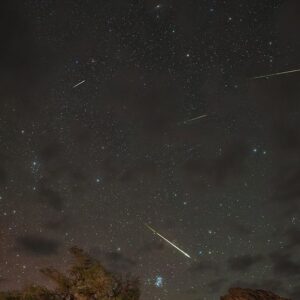
Perseid meteors: NASA / Preston Dyches
….And wait!
Meteor waiting
To be honest, meteor watching is mostly meteor waiting.
The Perseids are a rich shower though.
At the peak, you may see one a minute, 60 or so per hour.

Perseids, time lapse: NASA / JPL
The press and social media will quote rates of 150 an hour, 2 or 3 every minute.
But this is the number for ideal conditions.
They include a perfectly dark sky with meteors coming from exactly above at the peak time.
That’s not reality for most of us.
Enjoy the show
Even so, shooting star displays are exciting events.
Just lay back, look up and enjoy the free night sky show.
Next time
We’ll publish photos taken by our Wonderdome presenters.
Two of them are travelling to Spain to see the total eclipse.
We’ll also have pictures from home.
Let’s hope that the skies are clear for everyone.
Enjoy the Glorious Twelfth!
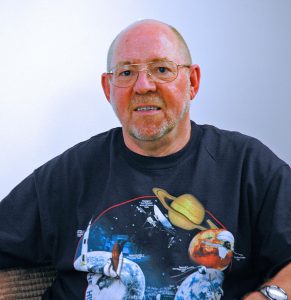
The author: Dennis Ashton, MBE, is a Fellow of the Royal Astronomical Society and a Wonderdome presenter.
In 2024, Dennis received the Special Contribution award from the British Association of Planetaria.
In 2025 he became a Member of the Order of the British Empire for over 50 years work in Astronomy Education.
WonderDome: Leading the Way in Mobile Planetariums
WonderDome offers a fully immersive experience, taking you on a journey through the cosmos. Perfect for all ages and abilities. We now boast a team of 15 presenters, located all over the UK, establishing us as the largest – and best – mobile planetarium organisation in the UK.
Stay Connected for Astronomy News and Events Follow WonderDome mobile planetarium on Twitter / X, Facebook, Instagram and TikTok to stay up to date on the latest news, shows and offers. Or visit our website at wonderdome.co.uk.
WonderDome is part of the Service4Education Group